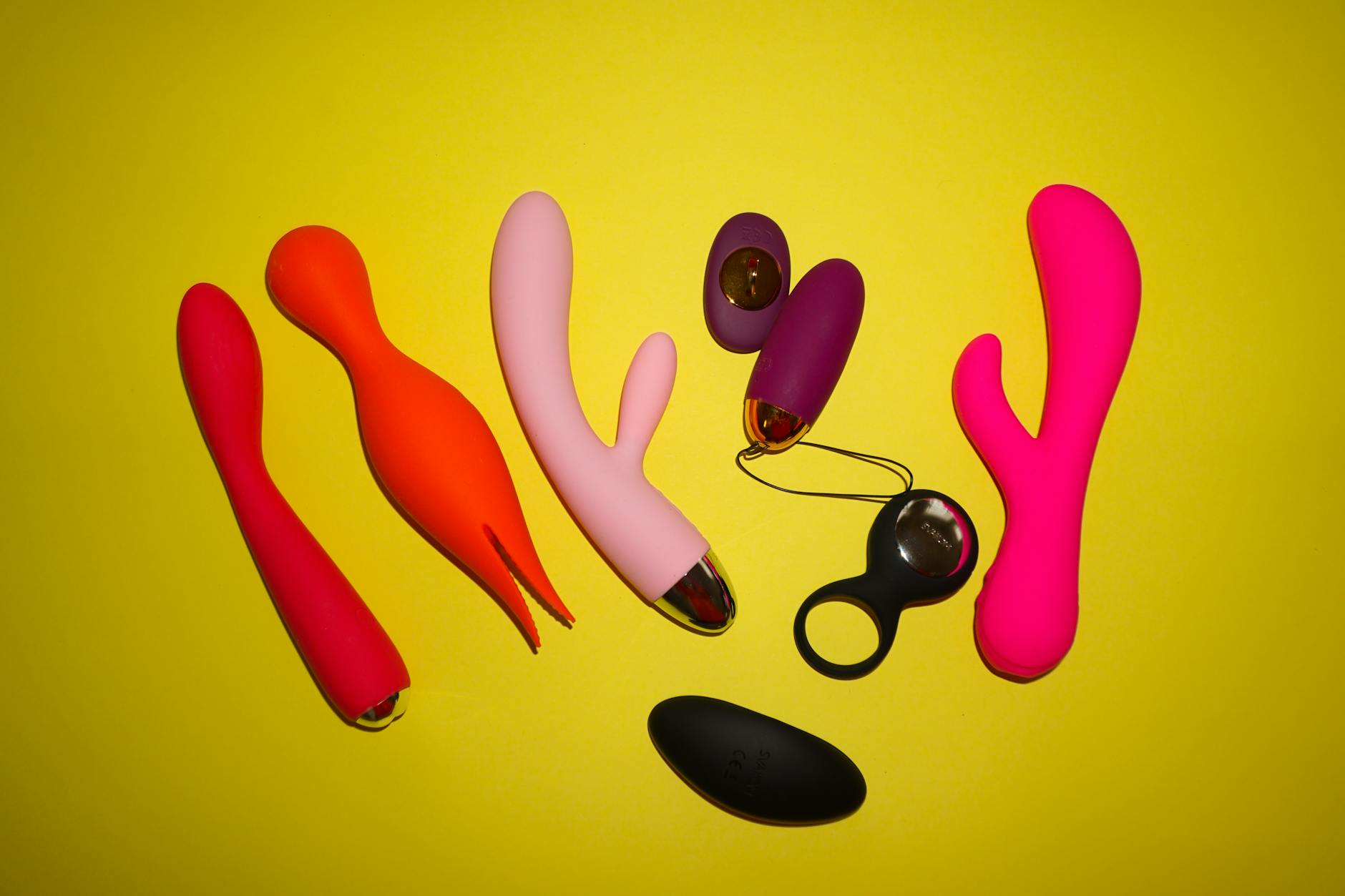
How to Introduce a Lemon Vibrator to a Partner Who Says They Don't Want One
The resistance isn't about the toy. It's about what they think the toy means. Here's what actually shifts that, and why a lemon clitoral vibrator works better than you'd expect.
Your partner doesn't actually hate toys. They hate what they think a toy means. Usually it's one of three things: that you're not satisfied with them, that they're being replaced, or that things are somehow broken and need fixing. A lemon clitoral vibrator short-circuits all three of those anxieties because it works so differently from what they're imagining.
When someone says "I don't want toys in bed," what they often mean is one of these:
"I'm worried you want this instead of me." This one sits under most partner resistance. The fantasy goes like this: you bring in a toy, and suddenly they're not enough. It's a stupid fear, but it's almost universal. A partner who's never thought about their role with a lemon vibrator will imagine it as a replacement rather than what it actually is: a tool that takes pressure off both of you.
"I don't know how to use it and I'll feel incompetent." Toys come with a learning curve. A lemon sucker like the Lem works so intuitively that this fear dissolves in about 30 seconds of use. There are no patterns to memorize, no settings to fumble through. You hold it, it works.
"This means our sex isn't good enough." This is the shame spiral. They hear "we need a toy" as "what we're doing doesn't work." The reframe is simple: a toy doesn't fix broken sex. It unlocks different kinds of pleasure that exist alongside what you're already doing.
A traditional vibrator is about speed and intensity. It looks industrial. It feels like you're introducing something separate into the equation.
A lemon clitoral vibrator is something else. It works through suction and pulsing, which mimics the sensation of actual contact much more closely than buzzing does. More important: it requires presence. You can't use the Lem and zone out. You have to pay attention to how someone's responding because you're controlling it in real time. That attention is the opposite of replacement. It's the opposite of outsourcing. It feels like collaboration.
Partners often say it feels more intimate because there's no distance between you and what's happening. You're still involved. You're still essential. The toy is just expanding what's possible.
Don't lead with the toy. Lead with what you want. "I'd like to explore what makes me feel the best, and I want you there with me." That's true. A lemon sexual toy isn't the endgame. Pleasure is. The toy is just the vehicle.
Then, separately, you can say: "I've read about this thing that works really differently from what I was imagining. It's less about replacing anything and more about us finding new sensations together. Would you be open to trying it?"
The key word is "together." Not "on me." Not "while you." Together.
Step one: Show them. Not in bed. Just... show them. "This is what I'm thinking about trying." Let them hold it, see that it's not intimidating, ask questions. Demystification defuses resistance.
Step two: Use it solo first. Tell them you're going to explore it on your own and you'll report back. This does two things: it removes the pressure that they have to know what to do immediately, and it gives you real data to share about what it actually feels like. That's way more persuasive than marketing copy.
Step three: Invite without demanding. "I loved how that felt. I'd really like to try it together. Would you be into that?" If the answer is no, you get to ask why. The reason might be totally different from what you were assuming. Maybe they want more time. Maybe they're worried about making a mistake. Maybe they want to talk through it more. The question opens the door instead of walking through it unannounced.
Step four: Start small. When you do use it together, don't build it into a whole scenario. Incorporate it the way you'd incorporate fingers or lips. Use it during foreplay for a few minutes, then put it aside and continue. Make it normal. The casualness signals that this is just another tool in the toolkit, not A BIG DEAL.
Most partners who were skeptical become genuinely enthusiastic within two or three times. Not because they suddenly love toys, but because they realize their anxiety was about a story they were telling themselves, not about reality.
They see that you're still fully engaged. They feel you paying attention. They notice that your responses are different and more intense. They get to be part of unlocking something new together.
That's actually pretty attractive. The worry that the toy would create distance usually flips into the realization that it created connection.
If your partner remains genuinely uncomfortable even after all this, that's real information. It's worth asking what's underneath. Is it a values thing? A past experience? A control issue? Genuine discomfort with their own sexuality?
Sometimes the obstacle isn't the toy at all. It's something else that the toy is bringing to the surface. That might be worth working through with a couples therapist who's comfortable talking about sex. I say this not because anything is wrong with you, but because sometimes we need a neutral third person to help decode what's actually going on.
What I've learned from years of working with couples is that resistance to lemon vibrators and other adult toys isn't usually about prudishness. It's about fear. And fear responds to information, reassurance, and time.
Here's what I tell couples: a toy isn't about what's missing. It's about what's possible. You're not saying "what we have isn't enough." You're saying "I want to know more about what feels good, and I want you to be the one who helps me find out."
That's radically different. One is deficit. One is expansion.
A lemon clitoral vibrator works so well for this conversation because it's so clearly collaborative. You can't use the Lem on someone else and zone out. It demands engagement. It requires you to stay present and attentive to how they're responding. That presence is exactly what builds confidence in a skeptical partner.
Start with the conversation. Lead with what you want, not what the toy does. Give them time. Make it easy to say yes, and even easier to say no without shame. And understand that sometimes the resistance is pointing to something worth talking through together, with honesty and without defensiveness.
Your partner's willingness to explore new things with you isn't guaranteed. Their willingness to talk about why they're hesitant? That's where actual intimacy lives.
This is a story they're telling themselves, not a reflection of reality. You're inviting them into something. That's the opposite of cheating. The move is to name it directly: "I know toys can feel threatening. For me, this is about us exploring together. Is there something specific that's worrying you?" Let them answer. Don't minimize their fear, and don't over-reassure (which often backfires). Just listen and then calmly restate your actual intention.
At least a few months. If they said no because they needed time to process, pushing earlier just confirms that you don't respect boundaries. But also think about whether something changed. Did they read something that made them curious? Did a friend mention using toys? Has the relationship shifted? New information is permission to revisit. Without it, let it rest.
Yes, if the dynamic is right. When both partners approach it as exploration rather than solution, and when using a lemon vibrator together becomes a shared ritual rather than a performance, it absolutely can deepen connection. The key is that you're doing this together, not at each other.
Stop. Ask what's happening. Maybe the sensation is too intense. Maybe they feel left out. Maybe they're having a body image moment. The only way forward is honest conversation in real time. That's not a failure. That's exactly what good partnering looks like.
Because the fantasy in their head was scarier than the reality. Their anxiety was about loss of intimacy, inadequacy, or a fundamental shift in the relationship. When none of those things happen, and instead they get to experience their partner having more intense pleasure, that fear dissolves. Suddenly it's not threatening. It's just hot.
You won't know until you ask with genuine openness to the answer being no. Some people have deep values around sex that don't include toys, and that's legitimate. Some people have trauma. Some people just aren't wired that way. The question is whether your needs and their boundaries can coexist in the relationship. If they can't, that's real incompatibility worth addressing directly, not something to sneak around.
Resistance to toys usually isn't about the toy. It's about what it represents in your partner's mind. A lemon clitoral vibrator has the advantage of being so intuitive and collaborative that it dissolves most of those stories pretty quickly. But the real shift happens in the conversation, not in the bedroom. Lead with honesty about what you want. Give them space to name their fears. Listen without defending. And understand that sometimes the goal isn't to convince them immediately, but to create enough safety that curiosity can develop.
If they never want to use a toy, you get to decide what that means for you. If they surprise you and become enthusiastic, you get to enjoy that together. Both outcomes are information about who your partner is and what you actually need. Trust that, and move forward from there.