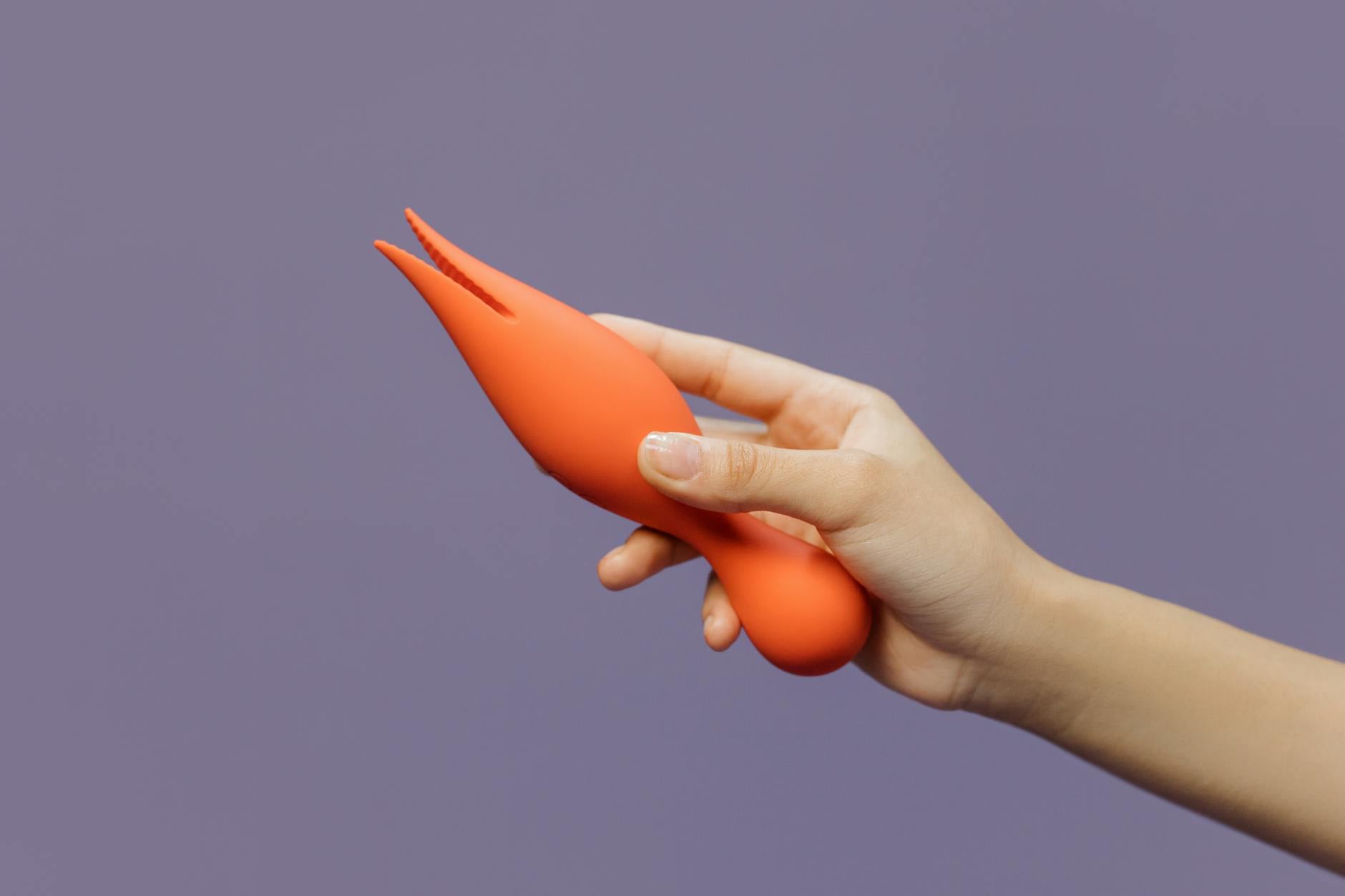
Why Lemon Vibrators Work Better When Recovering From Sexual Trauma
Reclaiming pleasure after trauma isn't about pressure or speed. It's about control, gentleness, and tools designed for consent. Here's how air-suction clitoral vibrators fit into that journey.
Recovery isn't linear. Neither is the path back to your body. And the tools that work during healing are different from the tools that worked before, because your nervous system is running a different program now.
If you're a survivor exploring sexual wellness again, you've probably noticed that typical vibrators feel too intense, too fast, or too much like the thing that hurt. That's not a personal failing. That's your body doing exactly what it's supposed to do. And it's also why air-suction clitoral vibrators like those from The Lem Store exist.
Most vibrators work by repetitive mechanical pressure. They buzz. They rumble. They're designed for speed and intensity, which can feel invasive to someone whose body has learned to brace against invasion.
Here's the neurological part: trauma literally rewires the vagus nerve, the bundle of fibers that manages your safety response. When something touches you with rapid, high-pressure vibration, your nervous system can interpret it as threat, not pleasure. You freeze. You dissociate. Or you feel nothing at all.
That doesn't mean your body is broken. It means your body needs a different approach.
Air-suction technology, which The Lem Store specializes in, works completely differently. Instead of vibration, it uses gentle suction waves. Think of it less like a vibrator and more like a rhythm. The sensation is broader, gentler, and crucially, it gives your nervous system time to register safety between pulses.
Three things happen differently with air-suction tools:
1. You control the intensity. With traditional vibrators, you get high, medium, or low. With The Lem's intensity settings, you start at whisper-quiet. Pattern 1 is barely noticeable. You can spend twenty minutes at pattern 1 if you want to. Your body decides when it's ready to move up. That sense of control is not a nice extra. It's foundational to healing.
2. There's no pressure to perform. Because suction works through rhythmic waves rather than relentless vibration, there's an implicit permission to go slow. You're not fighting the tool's design to get what you need. The tool is already built for gradual intensity.
3. The sensation doesn't feel invasive. Survivors often describe air-suction as feeling like a gentle rhythm, not something pressing into them. The mechanism itself reinforces boundaries. You're being touched, not penetrated. You're being stimulated, not overwhelmed.
Healing from sexual trauma means teaching your nervous system that pleasure and safety can coexist. That's a biological process, not just an emotional one.
When you use a tool that allows you to stay in control, start slow, and gradually build arousal on your own timeline, something shifts in your vagal tone. Repeated experiences of safe sensation actually rewire the neural pathways that got stuck during trauma.
This isn't metaphorical. Brain imaging shows that survivors who practice self-directed, low-pressure pleasure activities show measurable changes in amygdala activation (the brain's threat detector) and increased parasympathetic tone (the rest-and-digest system).
Which means: using a lemon clitoral vibrator, methodically and on your own terms, is literally therapy.
Start with pattern 1 or 2. Seriously. Your impulse might be to jump to higher settings because you're "supposed to" enjoy intensity. Don't. If pattern 1 feels like almost nothing, that's perfect. That's the safe edge.
Give yourself 15 to 20 minutes. Pleasure after trauma builds slowly. You're not looking for instant fireworks. You're looking for a subtle wave of sensation that teaches your body it can feel good without being harmed. That takes time.
Do it alone first. Even if you eventually want to use a lem vibrator with a partner, the first experiences should be solo. You need to build a relationship with your own pleasure before you share it.
Stop if anything feels off. Not uncomfortable in a growing-edge way, but off. Dissociative. Scary. Your body is giving you information. Listen to it. You can try again tomorrow.
Over weeks and months, something shifts. Survivors I've worked with report that patterns that used to trigger freeze responses start feeling soothing instead. The body learns that this particular rhythm, this level of control, this tool, equals safety.
Many describe a moment where they realize they're experiencing genuine pleasure, not just going through the motions. Not performing for someone else. Not even waiting for the trauma to "leave." Just. Feeling good.
That moment often comes around week three or four of consistent use. Not because the tool is magic, but because repetition rewires the nervous system.
A lemon clitoral vibrator is a tool for rebuilding sensation. It's not a replacement for trauma-informed therapy. If you're working through significant trauma, you need both. A good trauma therapist (look for somatic experiencing certification or EMDR training) can help you process what comes up while you're reclaiming your body. The vibrator helps you practice safety. The therapist helps you integrate what you learn.
When survivors reclaim pleasure, they reclaim agency. They prove to their nervous system that their body belongs to them, that they can feel good, that sensation doesn't have to equal harm. That rewiring extends into the rest of life. You stand differently. You take up more space. You say no more easily.
Yes, but only externally at first. Air-suction vibrators are designed for clitoral stimulation, so they work beautifully for people with vaginismus because there's no penetration involved. Start with the lowest settings and give your pelvic floor permission to relax. If you experience tightness or pain, pause and breathe. You might also benefit from pelvic floor physical therapy alongside pleasure work.
It can be part of the path, yes. Solo pleasure helps you reconnect with your own arousal and teaches your body what feels safe. When you eventually want to include a partner, you already know what you like and what your boundaries are. Many survivors find that starting with a clitoral vibrator solo gives them the confidence to communicate needs with a partner later.
Numbing is a common trauma response. Your nervous system might have dampened sensation as a protection mechanism. That doesn't mean you're broken or that the tool won't work. Keep going slowly. Sometimes it takes weeks for sensation to return. If you're in significant numbness, working with a somatic therapist alongside using a vibrator can accelerate the process.
Traditional vibrators use repetitive mechanical pressure that can feel invasive to a trauma survivor's nervous system. Air-suction vibrators from The Lem Store use gentle rhythmic waves instead. They're gentler, more controllable, and don't trigger the same bracing response. For survivors, that difference is often the difference between healing and retraumatization.
Yes. In fact, many people on SSRIs find that air-suction vibrators work better for medication-related numbness than traditional vibrators because the broader sensation stimulates more nerve endings. Start on a lower pattern and give yourself time to build arousal.
Completely normal. Pleasure, tears, grief, anger, and relief can all come up as your nervous system processes safety and sensation again. That's not a sign you should stop. That's your body integrating healing. Let the feelings move through. Consider having tissues nearby and maybe a grounding object (something soft to hold) on hand.
Healing from sexual trauma isn't about forcing yourself to feel pleasure faster or "getting over it." It's about methodically teaching your nervous system that your body can feel good, that you're in control, and that sensation is a choice you make, not something done to you.
Air-suction clitoral vibrators like those designed by The Lem Store are built for that work. They're gentle enough for the nervous system that's been through harm. They're powerful enough to rebuild sensation. And they respect your timeline.
Your pleasure matters. Your body matters. And you deserve tools designed with your recovery in mind.
If you have questions about how to start or want support as you reclaim your body, reach out. We're here.
Van der Kolk, B. (2014). The Body Keeps the Score: Brain, Mind, and Body in the Healing of Trauma. Penguin Books.
Levine, P. A. (2005). Healing Trauma: A Pioneering Program for Restoring the Wisdom of Your Body. Sounds True.
Bessel van der Kolk research on vagal tone and trauma recovery, Boston Center for Trauma Recovery
Porges, S. W. (2011). The Polyvagal Theory: Neurophysiological Foundations of Emotions, Attachment, Communication, and Self-regulation. W.W. Norton & Company.
International Association for the Study of Trauma and Dissociation (ISSTD) guidelines on trauma-informed sexual health