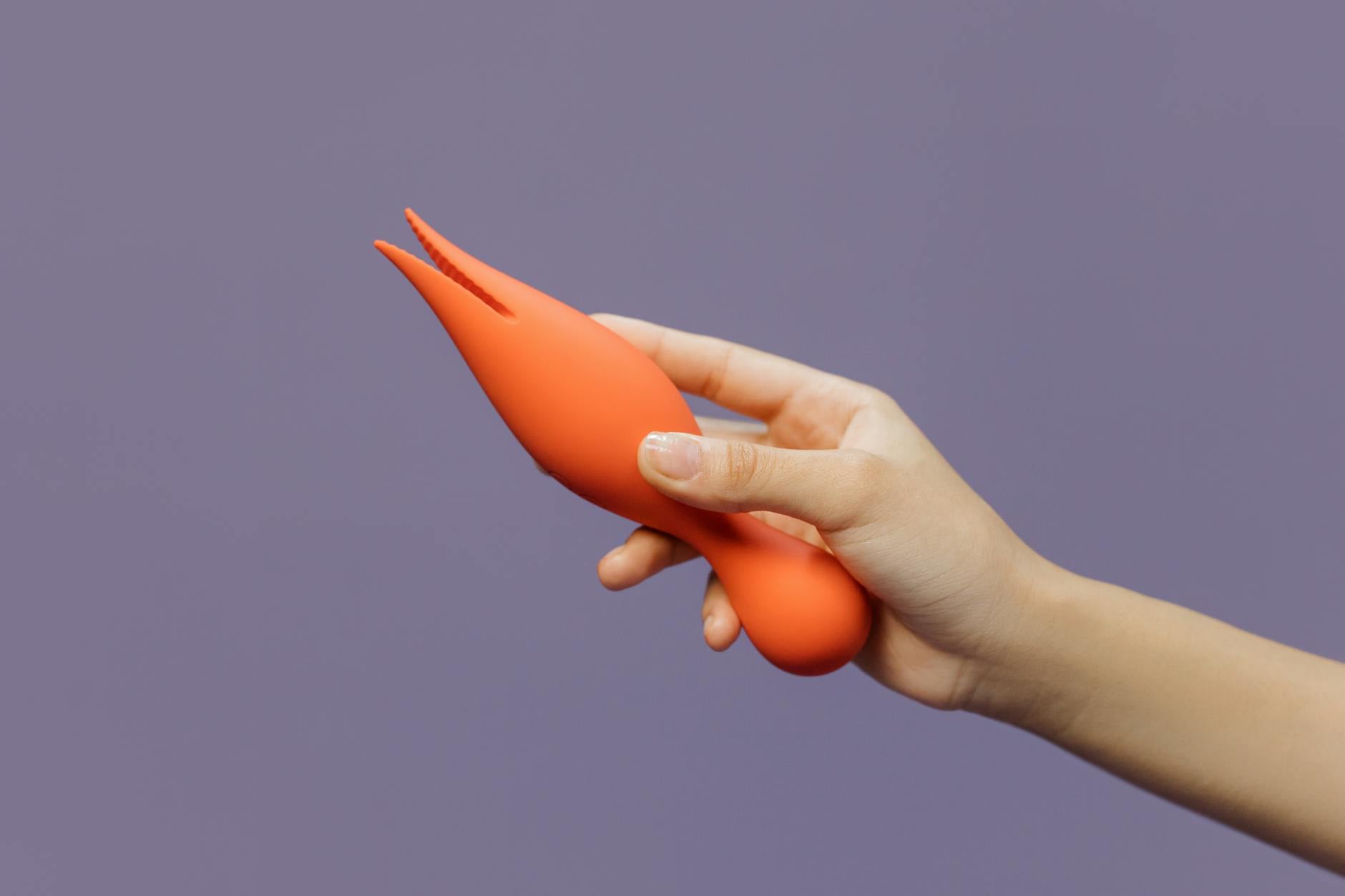
Why Lemon Vibrators Work Better for Partners With Different Sensitivity Levels
When one partner needs more stimulation than the other, a lemon clitoral vibrator isn't just a toy. It's a translator between two different bodies and the bridge that closes the arousal gap.
One partner orgasms in four minutes. The other needs twenty. One loves intensity from the jump. The other needs a slow build. One body responds to broad pressure. The other craves focused sensation. Sound familiar?
This isn't a compatibility problem. It's a physiology problem. And lemon vibrators, specifically clitoral suckers like the Lem, solve it in a way that traditional toys and fingers alone never can.
Arousal sensitivity isn't about effort or desire. It's baked into neurology, hormones, and tissue structure. Here are the actual reasons partners have wildly different turning-on speeds.
Nerve density varies by genetics. Some people are born with higher clitoral nerve density. Others have the same number of nerves but they're more densely packed, making light touch feel intense. This isn't changeable and it's not about how attracted someone is to their partner.
Hormonal cycles matter, even without menstruation. All bodies cycle through testosterone and estrogen shifts, even those who've stopped menstruating. These micro-shifts change arousal speed day to day. One partner might be riding a hormonal peak while the other's in a valley.
Stress and system arousal are different. Some partners are naturally in a higher baseline state of activation. Their nervous system primes faster. Others need deliberate downtime before arousal can even start. This is temperament, not passion.
Prior stimulation history shapes expectations. If one partner spent years with particular types of touch, their body learned to respond to that specific signal. The other partner's nervous system is wired differently. Neither person did anything wrong.
The research on couples is clear: mismatched arousal is one of the top sources of sexual frustration, not because the mismatch is real (it always is), but because couples treat it like a flaw instead of a feature to work around.
A lemon vibrator works differently than traditional vibration. Instead of oscillating against tissue, suction stimulation creates a pulling sensation that mimics oral sex. This matters because it's gentler on sensitive tissue and doesn't require direct friction. For partners with sensitivity mismatches, this changes everything.
They're gentler on over-sensitive partners. If one partner finds traditional vibrators overwhelming or even painful, the suction mechanism on a lemon clitoral vibrator distributes sensation differently. The LE lemon vibrator, for example, works at various intensity levels. An overly-sensitive partner can stay at pattern one or two without feeling like they're "holding back" the experience. There's no shame in lower intensity because intensity isn't the point. Sensation is.
They're powerful enough for partners who need more. Simultaneously, the suction mechanism is more effective than fingers or manual stimulation for partners who need serious, focused stimulation to reach orgasm. A partner who typically takes twenty minutes with manual stimulation might orgasm in eight or nine with consistent suction. This isn't about rushing. It's about giving the nervous system what it actually needs.
They remove the performance pressure. Here's the psychological piece that matters most. When one partner is holding a vibrator, they can't monitor the other's face or feel obligated to keep going indefinitely. The toy becomes a neutral third party. The partner with faster arousal isn't feeling like they're leaving their partner behind. The partner with slower arousal isn't performing gratitude. Everyone's just... enjoying the tool.
Using a lemon sucker together when sensitivity levels differ means thinking about sequence, not simultaneous stimulation.
Start with the less-sensitive partner. Whoever needs more time to warm up goes first. The other partner can use their hands, mouth, or yes, another toy. The goal isn't for both people to finish at the same time. That's the myth that creates pressure. The goal is for everyone to get what they need.
Use the toy for whoever gets faster results. If one partner responds best to clitoral suction, they use the lemon vibrator during their turn. If the other partner prefers something different, that's fine. You're not locked into using the same thing.
Switch the sequence based on mood. Some nights, start with the faster partner. Other nights, lead with the one who takes longer. This removes predictability and also removes the sting of "we always do it your way."
Communicate about what "done" means. Orgasm isn't the only finish line. Some partners are happy after arousal and some connection, even without climax. Others need release. Having one conversation about this beats months of confusion.
I recommend partners try this: one person uses the lemon vibrator on their partner for a set amount of time (ten minutes, not "until you come"). Then swap roles. The pressure lifts when the goal becomes "let's both have pleasure" instead of "let's both finish together."
When couples start paying attention to how differently their bodies work, they often discover something else: they've been making assumptions about what their partner wants or needs.
The partner who reaches orgasm quickly might think they're selfish. The partner who takes longer might think they're broken. Neither is true. One partner's nervous system is just faster to activate. That's not a flaw to hide. It's data to use.
Using a lemon clitoral vibrator together often becomes the moment couples stop trying to match and start appreciating. "Your body needs this kind of stimulation and mine needs that" becomes normal instead of awkward. From there, the actual intimacy gets better because you're working with your bodies, not against them.
That's about insecurity, not the toy. The conversation isn't "we need this toy." It's "my body sometimes needs X type of stimulation to feel good, and I'd like your support exploring that together." If a partner is threatened by sex toys, that's usually about deeper fears of inadequacy. A therapist can help unpack that. A toy isn't going to fix a trust issue, but it might be the thing that brings the trust issue into the open where you can actually address it.
Yes, but you might start with the lower intensities and give it time. Some partners with low arousal responsiveness respond beautifully to consistent suction. Others need the combination of suction plus other stimulation. The advantage of a lemon sucker is the range of intensity. You're not locked into one setting.
Ownership is psychological, not literal. If one partner always holds the toy or it only comes out for one person's pleasure, it stays separate. If you both use it, take turns introducing it, and talk about how it feels, it becomes shared. Some couples even name their toys, which sounds silly but genuinely helps with the psychology of "this is ours."
Then the toy isn't the solution to that particular problem. But orgasm isn't the only measure of a good sexual experience. If using a lemon vibrator makes arousal faster and sensation stronger, that's a win even if climax doesn't follow. Sometimes the roadblock to orgasm isn't about stimulation. It's about stress, medication, disconnection, or past trauma. A toy can't fix those, but a good therapist can help.
Completely normal. Nerve density varies as much as height or eye color. Some partners are neurologically wired for sensitivity. Others aren't. This isn't about how much you love each other. It's about how your nervous systems are constructed. The lemon vibrator's range of settings exists precisely because different bodies need different things.
As often as you both want. Some couples use it every time. Some use it once a week. Some use it only when sensitivity mismatches feel particularly frustrating. There's no "should." The point is that it's available when you need it, not that you feel obligated to use it.
Honestly, the biggest shift I see in couples who start using clitoral vibrators like lemon suckers isn't physical. It's relational. They stop trying to have the same body and start appreciating that they have different bodies with different needs. That acceptance ripples into everything. When you stop performing sameness, you can actually connect.
If you're in a partnership where sensitivity levels don't match, the lemon vibrator becomes permission to stop forcing an experience that was never going to work the old way. That's not settling. That's being smart about what your actual bodies need. And that's usually when things get better.
If mismatched sensitivity is causing real friction in your partnership, talking it through with someone trained in couples work can help too. Feel free to reach out to Hello Nancy if you want resources for finding that support.