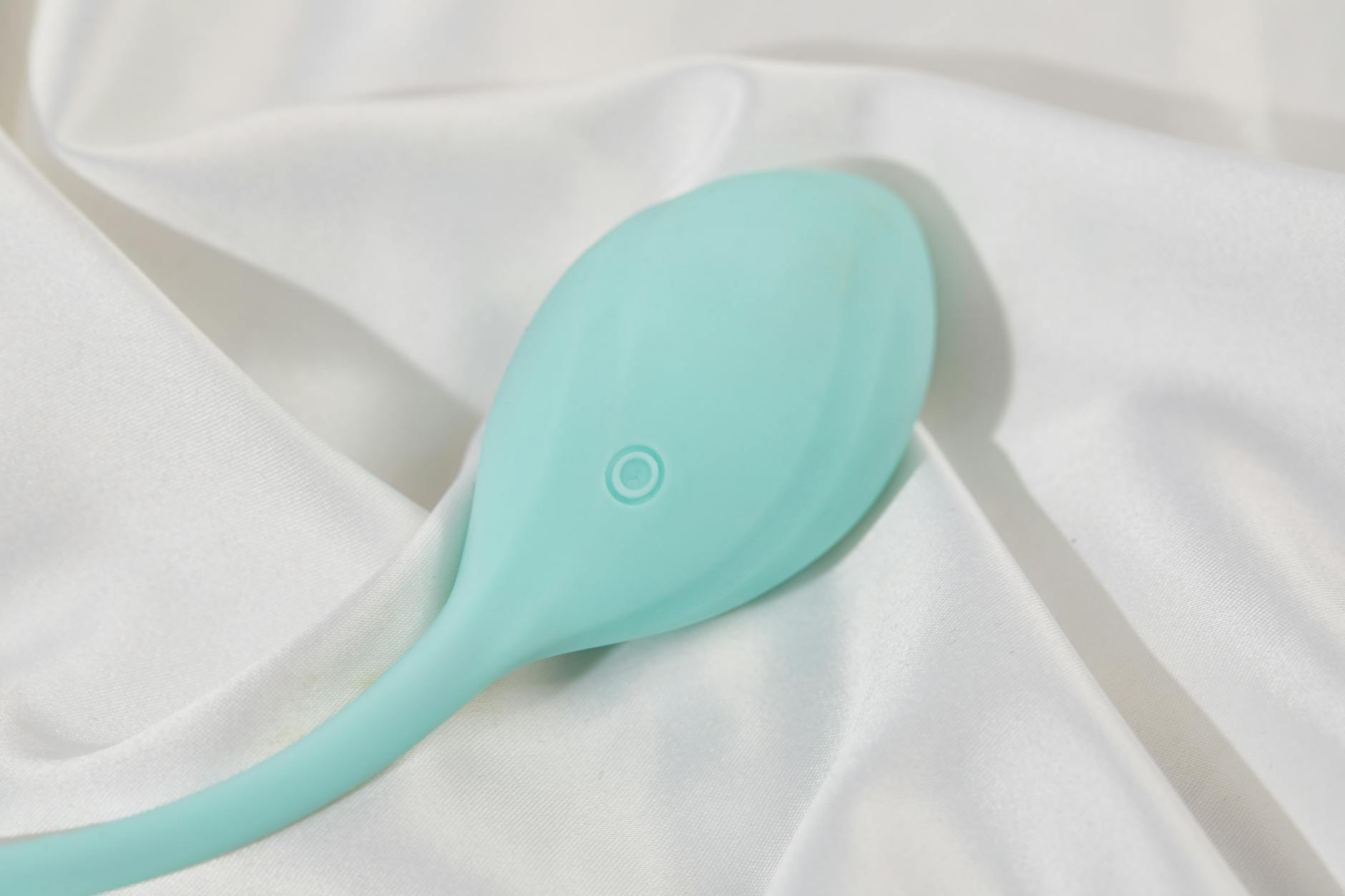
Why Lemon Vibrators Feel Different After Hormonal IUD Insertion
Your body didn't break. The hormonal shift from an IUD changes arousal speed, sensation intensity, and orgasm shape. Here's what's actually happening and how to work with it.
You got a hormonal IUD inserted. Three weeks later, you picked up your clitoral vibrator and something felt off. Maybe arousal takes longer to build. Maybe sensation feels muted. Maybe your orgasms have shifted shape entirely. Here's the thing: you're not broken, and your vibrator didn't stop working. Your body's chemistry changed, and that changes everything about how pleasure registers.
This is one of the most under-discussed side effects of hormonal contraception, and it's wildly common. If you've noticed your lemon vibrator or any clitoral vibrator feels different since your IUD went in, you're experiencing a legitimate physiological shift. Let me walk you through what's actually happening.
A hormonal IUD releases a steady, low dose of synthetic progestin directly into your system over three to five years. This isn't the same hormone dose your body makes naturally, and it's not the same as birth control pills (which you can adjust or stop). This constant presence rewires baseline arousal sensitivity.
Three main things happen.
First, your testosterone drops. Yes, people with vulvas produce testosterone, and it's a major player in sexual desire and clitoral sensitivity. When progestin levels stay elevated, testosterone production suppresses. Lower testosterone means weaker desire signals and a brain that takes longer to fire up arousal responses.
Second, your estrogen typically stays higher than it would without the IUD, but in a different ratio to progesterone. This ratio shift affects how much blood flows to genital tissue when you're aroused, which changes how quickly the clitoris engorges and how intensely stimulation registers.
Third, the constant progestin creates a different baseline for your nervous system. Your brain gets used to a flatter hormonal landscape, which means stimulation that used to feel electric now feels like a normal Tuesday. You're not numb. Your threshold for sensation has shifted.
Clitoral vibrators like the Lem work by creating rapid suction and vibration patterns that stimulate thousands of nerve endings at once. The intensity of that experience depends partly on how sensitive those nerve endings are at any given moment. A hormonal IUD can dull that responsiveness.
This isn't permanent, and it doesn't mean the device is broken. It means you're working with a different nervous system baseline than you were before insertion.
The first 3-6 months after IUD insertion is when this effect hits hardest. Your body is adjusting to a new hormonal reality. By month six or nine, some people report their sensitivity creeping back up as the body settles. Some notice it never fully returns to pre-IUD levels. Both are normal.
Before your IUD, you maybe needed 5-10 minutes of mental arousal to feel ready for clitoral stimulation. Post-IUD, that baseline stretches to 15-20 minutes, sometimes longer.
This isn't laziness or relationship friction. This is neurobiology. Your brain's arousal response is running on a slower clock because testosterone is lower and baseline cortisol might be slightly elevated (progestin can affect stress hormone regulation in some people). The pathway to pleasure hasn't disappeared. It's just longer.
What does this mean practically? You need more warm-up time before reaching for your lemon vibrator. This isn't a flaw. It's information. Giving yourself permission to take 20 minutes just thinking about what you want, reading something hot, or touching your partner, before using a device, changes the entire experience.
Many people report that post-IUD orgasms feel different. Sometimes more shallow. Sometimes harder to reach. Sometimes you can have one, but it takes longer, or the intensity feels muted even when you do arrive.
This is because the hormonal environment affects both arousal capacity and orgasm architecture. Orgasms literally involve different muscle contraction patterns, brain activation, and spinal cord response depending on your hormonal state. Change the hormones, and you change the orgasm.
If you're using the Lem or another clitoral vibrator and noticing your orgasms feel different, you're not imagining it. The device is still doing its job. Your body's response capacity has shifted.
Build in more warm-up time. Thirty minutes before you plan to use a vibrator, start doing things that register as erotic to you. Read erotica, scroll through what turns you on, be with your partner, take a long shower. Let your brain lead before your body shows up. This compensates for the delayed arousal timeline the IUD creates.
Use lube generously. Hormonal IUDs can slightly reduce vaginal lubrication in some people (though not as dramatically as estrogen-only methods). Water-based lubricant isn't a sign something's wrong. It's a tool that makes sensation sharper. The Lem and other clitoral vibrators work better when there's slip against the skin. More lube equals more sensation transfer.
Start on lower intensity settings. If you're used to running your vibrator on pattern 5 or 6, dial back to 2 or 3. Let sensation build. This trains your nervous system to feel detail in stimulation instead of chasing intensity. Counterintuitively, lower settings often produce stronger orgasms because your body isn't being overwhelmed.
Track your cycle patterns, even with an IUD. Hormonal IUDs suppress ovulation, but your body still has microfluctuations in hormone levels throughout the month. Some days sensation feels sharper. Some days you need more warm-up. Noticing this pattern helps you work with your body instead of against it. A few people report that days 8-12 of their cycle (if they still menstruate) feel more sensitive. Mark it. Adjust accordingly.
If sensation dropped off a cliff and hasn't budged after six months, mention it to your gynecologist. Hormonal IUDs do affect desire and sensation. That's expected. But if the shift is severe, or if you also notice mood changes, persistent numbness, or complete loss of arousal, there might be something else worth investigating. Sometimes low-dose testosterone therapy or switching to a different contraceptive method helps. But only after you know what's actually happening.
If your IUD has been in for a year or more and sensitivity still hasn't returned, don't assume it won't. Some bodies take longer. Some people find that switching to copper IUDs (non-hormonal) restores sensitivity within weeks. That's a conversation worth having with your provider.
Let me be direct: a hormonal IUD changes how your body responds to stimulation, but it doesn't erase pleasure. It complicates it temporarily. And once you understand what's happening, you can work with it instead of against it.
The lemon clitoral vibrators you own haven't failed you. Your body is in a new hormonal state, and that state requires different timing, different setup, different approach. That's not a downgrade. That's information. Use it.
Many people find that once they adjust their expectations and technique, their pleasure deepens. Because you're not chasing the sensation you used to have. You're discovering what arousal looks like right now. And that's often richer than you'd expect.
Not always, but sometimes. For most people, sensitivity bounces back partially or fully once the body adjusts. Some notice dampened sensation persists for the entire time they have the IUD in. If you remove the IUD, sensitivity typically returns within a few weeks to a few months. The change isn't permanent to your body, just while the hormonal exposure is active.
Completely. Vibrators don't interfere with IUD placement or function. The Lem uses suction and vibration on external clitoral tissue, nowhere near your uterus or IUD strings. Penetrative vibrators positioned toward the cervix are sometimes discouraged (and only by certain very cautious providers), but external clitoral vibrators are universally considered safe. Use any lemon vibrator or clitoral toy without worry.
For most people, yes, but it takes time. The first three months post-insertion are the worst. By six months, many notice slight improvement. By a year, arousal might feel more like baseline again. For some, the shift is permanent for as long as the IUD is in place. Everyone's timeline is different. Patience matters here more than you might expect.
Completely. Hormones regulate muscle contraction, blood flow, and brain activation during orgasm. Change your hormones, and you change the orgasm shape. Some people describe them as shorter, shallower, or requiring more effort. Others report they eventually feel fuller again. Most report they just feel different, not worse, once they stop comparing them to pre-IUD orgasms.
That's between you and your doctor, but here's the real answer: it's worth trying the adjustment strategies for six months first. More warm-up time, lube, lower vibrator settings, and patience often restore pleasure significantly. If after six months your desire is still tanked or your sense of sexuality feels off, talk to your provider about copper IUDs, pills you can control, or other options. Your pleasure matters. Your contraception should work for your whole life, not just your fertility.
You could, but I'd suggest the opposite. Start lower than you think you need. Lower settings create more nuanced sensation. Your body might register more detailed stimulation from pattern 2 on the Lem than it does from pattern 6, because pattern 6 is overwhelming the dulled nerve endings. Go slow. Let your nervous system catch up. Intensity will come back when it's ready.
Your hormonal IUD changed your arousal blueprint. That's not a failure. That's how hormones work. Your lemon vibrator or clitoral vibrator still does exactly what it's designed to do. Your body's capacity to feel it just shifted. Once you understand that, you can adjust your approach, reclaim your pleasure, and build something that works for your new normal. And honestly? Many people find that normal is worth exploring.