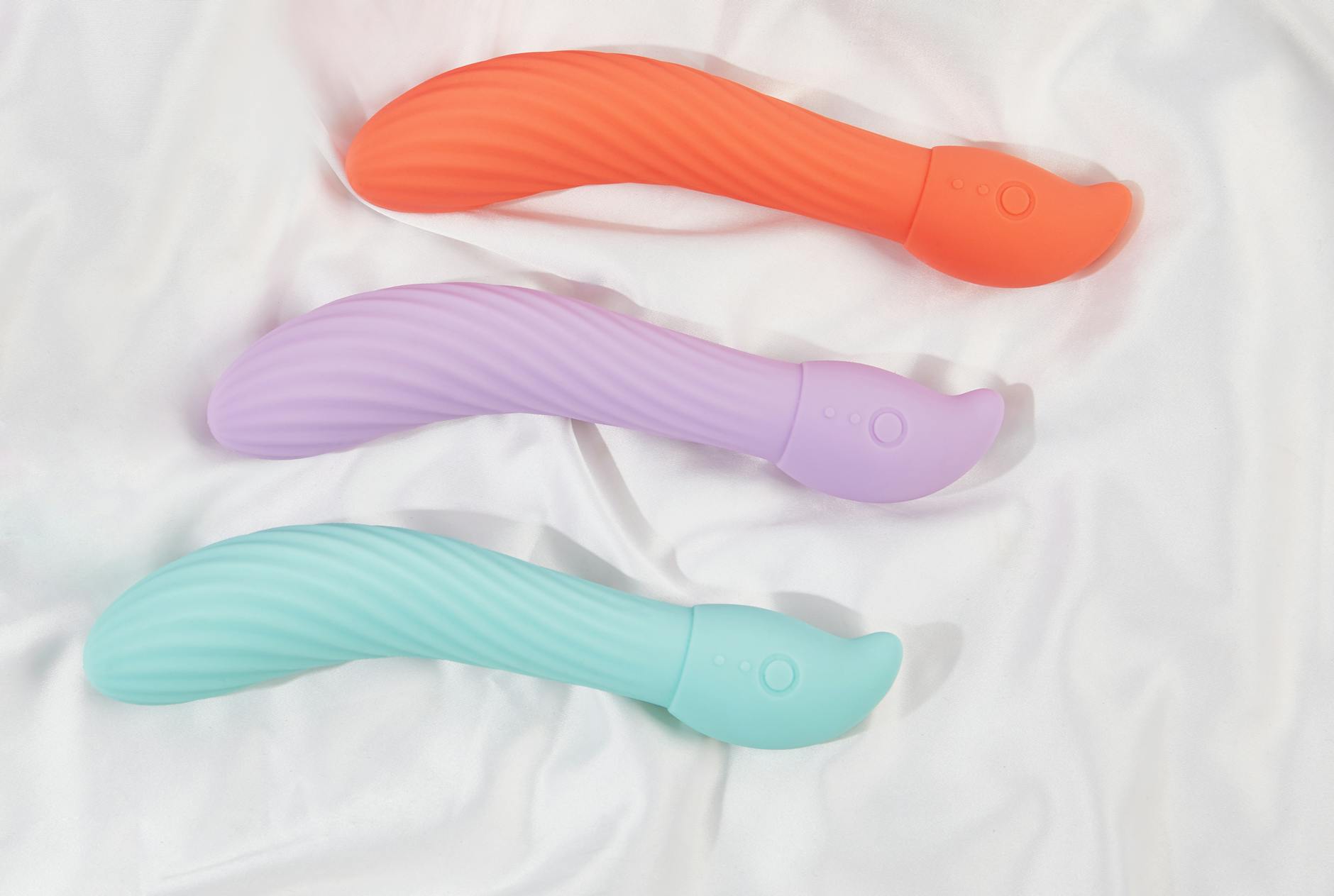
You've used a lemon vibrator solo. You know how it feels. You know your patterns, your rhythm, what gets you there. Then you introduce it in a partnership context, and suddenly everything feels different. The same device, the same body, but something fundamental has shifted. The temptation is to blame the vibrator. The real story is about your nervous system.
I've worked with hundreds of couples navigating this exact moment. The most common refrain? "It didn't feel the same." Some people assume they're broken. Others assume their partner is the problem. The truth is messier and more interesting. Your lemon clitoral vibrator isn't the issue. Your brain's threat-assessment system is.
When you're alone, your body has permission to prioritize pleasure. Your nervous system is in parasympathetic (rest-and-digest) mode. You control the pace, the pressure, the environment. You've built neural pathways around your own arousal patterns over weeks or months or years.
When a partner enters the equation, everything changes neurologically. Your sympathetic nervous system (fight-flight-freeze) activates at some level, even if you're deeply attracted and trust them. This is automatic. It happens whether you want it to or not. Your brain is running simultaneous calculations: Am I safe? Am I performing well? What if I'm not aroused fast enough? What's he noticing? What's she thinking right now?
That cognitive load doesn't just sit quietly in the background. It directly suppresses genital sensation. A clitoral vibrator like the Lem works through direct stimulation, but if your nervous system is running a parallel process of vigilance, that vibrator is competing for your attention against your own internal threat-detection system. And your threat-detection system almost always wins.
Here's what I see most often: a person who's confident, capable, and fully capable of intense solo orgasms suddenly second-guesses whether a Lem vibrator is "working" when they're with a partner. They're not broken. Their device isn't weak. Their parasympathetic nervous system is offline.
Performance anxiety isn't just about worrying you're boring your partner. It's about the vulnerability of being watched during something you've kept private. Solo pleasure is yours alone. Partnered pleasure requires permission from someone else to feel good, and that permission has to come from them and from you simultaneously.
The lemon sucker or other clitoral vibrators don't fail in these moments. You do. Your body does. And that's not a character flaw. It's physiology.
One of the cruelest parts of introducing any sex toy in a new partnership is that people expect the transition to be faster than it actually is. If you can orgasm with a lemon vibrator alone in 10 minutes, why can't you do it with a partner present? The answer is that you're asking your body to accomplish three things simultaneously: process physical sensation, manage psychological safety, and perform.
Most people can manage two of those at a time. All three at once takes practice. It takes your nervous system learning that this new context is safe. It takes your brain rewiring expectations about what's supposed to happen and when.
For some couples, this shift happens in a few encounters. For others, it takes weeks or months. Neither timeline is wrong. Both are normal. The worst thing you can do is treat it as a problem to be solved urgently.
As your relationship deepens and your nervous system learns that this partner is safe, something gradually shifts. The parasympathetic activation begins to outpace the sympathetic. Your ability to drop into sensation improves. Many people find that after the initial adjustment period, they can orgasm more reliably and more intensely with a partner than they could alone.
This is because a few things happen neurologically. First, your threat-assessment system finally backs off. Second, you develop new neural pathways specifically tied to this partner, their touch, their presence. Third, the psychological safety that comes from being known by someone else actually deepens sensation in ways solo play can't replicate.
People who've been with the same partner for years will tell you something counterintuitive: sex toys become more effective, not less. Because the nervous system cost has been paid. There's no more energy devoted to "Am I safe?" That entire bandwidth gets reallocated to pleasure.
If you're in the early weeks or months of introducing a lemon clitoral vibrator with a new partner, here's what actually helps.
Go slower. Not slower stimulation, necessarily, but slower integration. Use the Lem solo when you're together sometimes. Let your partner see it. Let them see you use it without pressure to perform. Desensitization through familiarity is real.
Communicate differently. Don't say, "It's not working like it does alone." Say, "My body needs some time to adjust to this context. That's normal." Reframe it as a feature of your nervous system, not a failure of the device or yourself.
Manage the spectator mode. One of the hardest psychological tricks is being watched. Ask your partner to focus on their own sensation sometimes. Ask them to be present but not actively watching. Some couples find that side-by-side stimulation (where both partners are using something) feels less performance-based than one person being the focus.
Build safety first. Before you're introducing toys, make sure the baseline relationship has enough emotional safety and communication. If there's unresolved tension, a lemon vibrator becomes a symbol of that tension, not a tool for pleasure.
New relationships also carry hormonal shifts. Early-stage partnership flooding your system with dopamine and norepinephrine can actually suppress some genital sensation, ironically. Cortisol (stress hormone) definitely will. If you're new to a relationship and also stressed about work, family, health, or the relationship itself, your nervous system is taxed. A clitoral vibrator can only work with the bandwidth you have available.
This is why some couples find that sexual satisfaction increases once the relationship settles into a more stable, less dramatic phase. The novelty-driven hormonal rush declines, but it's replaced by deeper parasympathetic stability.
That said, not every mismatch between solo and partnered pleasure is a nervous system problem. Sometimes it's about actual incompatibility in desire, touch style, or frequency. If you've been with a partner for 6-12 months and still can't access arousal with them present, and the relationship communication is solid, that might be pointing to something real about the match.
But most of the time? In the first few weeks or months? It's just your nervous system doing exactly what it's supposed to do. Protecting you. Running diagnostics. Learning whether this person is actually safe. That's not a defect. That's wisdom.
Expect adjustment. Expect that a lemon vibrator or other clitoral vibrators might feel less powerful or less reliable in partnered contexts initially. Expect that your solo orgasm patterns might not translate directly. Expect that communication will be awkward. Expect that you'll wonder if something is wrong with you.
None of that means something is wrong. It means you're normal. Your nervous system is doing its job. Your body is asking for safety and trust before it gives you full access to pleasure. That's not a problem. That's a feature. And once you build that safety, many people find that partnered pleasure becomes richer, more reliable, and more complex than solo pleasure ever was.
Give yourself permission to need time. Give your partner permission to be patient. And give your nervous system permission to protect you until it's sure you're safe.
Your nervous system is partially in sympathetic mode, which suppresses genital sensation. You're not imagining it. It's a real physiological response to the presence of another person, regardless of attraction level. This improves with time as your body learns the context is safe.
Completely normal, especially early on. The gap between solo and partnered arousal often closes within weeks or months as your nervous system adjusts. If it persists beyond six months and communication is open, it might be worth exploring deeper relationship dynamics with a therapist.
Yes, but frame it accurately. "My nervous system needs time to adjust to this being shared" is true and feels less accusatory than "It doesn't work as well when you're here." Your partner isn't the problem. The adjustment period is normal.
Not necessarily. Many couples find that consistent, pressure-free introduction of toys together actually accelerates the adjustment. The key is making it about exploration, not performance.
It varies widely. For some couples, three or four encounters. For others, a few months. Relationship stress, communication quality, and individual nervous system sensitivity all play a role. If you're frustrated, talking to a couples therapist or sex therapist can help.
Yes, in some ways. Long-term couples often have more parasympathetic stability together, which means the adjustment can be faster. But they might also carry relationship baggage or shame around sex toys, which slows it down. Both are surmountable.
When you introduce a lemon vibrator or other clitoral toys into a new partnership, you're not just introducing a device. You're renegotiating pleasure itself. You're inviting your partner into something you've kept solo. That requires trust, communication, and a nervous system that's learned this context is safe.
That learning curve is frustrating. It's also normal. And on the other side of it, many couples find that shared pleasure becomes deeper, more varied, and more satisfying than either partner experienced alone. The device doesn't change. What changes is the safety your body feels in using it. And that's worth the wait.
If you're navigating this transition and feeling stuck, consider reaching out for support. We're here to help. Contact us if you'd like to talk through what's actually happening, or check our FAQs for more specific scenarios.