Antidepressants save lives. They also frequently make orgasms harder to reach, slower to build, or completely flat when they do arrive. If your psychiatrist mentioned this at all, they probably said something vague like "sexual side effects are possible" and moved on. That's not enough information to actually deal with it.
The good news: this is one of the few medication side effects that responds really well to the right strategy. And a lemon clitoral vibrator designed specifically for arousal patterns is often the missing piece.
SSRIs (selective serotonin reuptake inhibitors) like sertraline, paroxetine, and fluoxetine work by increasing serotonin in your brain. But serotonin also plays a role in sexual response. Higher serotonin can dampen the norepinephrine and dopamine surges that trigger orgasm. It's a real neurochemical trade-off, not something you're imagining or doing wrong.
The delay is usually the first thing people notice. Orgasm takes twice as long, or three times as long. Then comes the flatness. The sensation arrives, but with less intensity. Some people describe it as muted, like watching pleasure happen to someone else.
There's also the arousal piece. If your baseline desire was already affected by depression, adding an SSRI can feel like you're starting from zero instead of somewhere in the middle.
Talk to your prescriber about these before deciding your sex life is just a casualty of mental health treatment.
Timing adjustments. Some people find that taking their dose 12 hours before sex, rather than at bedtime, creates a wider window of better responsiveness. This doesn't always work, but it costs nothing to ask.
Dose tweaks. Sometimes moving to a slightly lower dose, if your psychiatrist agrees it's still effective, improves sexual side effects. The trick is not sacrificing your mental health for your sex life. This is a conversation, not a solution on its own.
Switching medications. Not all SSRIs hit pleasure the same way. Sertraline often has fewer sexual side effects than paroxetine. Bupropion, a different class entirely, sometimes actually improves sexual function. But switching has its own risks and timeline. This needs professional guidance.
Adding something on top. Some psychiatrists recommend adding a second medication specifically to counteract the sexual side effects. This isn't standard practice everywhere, but it's worth asking about.
Here's the part that matters: none of these conversations happen unless you bring them up. Your doctor isn't avoiding the topic to be cold. They're managing what feels like a bigger problem in real time, and sexual side effects feel secondary in the moment. They're not. Bring it up directly.
When orgasm takes longer and feels flatter, traditional vibration often feels like you're chasing something that keeps moving away. You need something with more targeted intensity and a different kind of stimulation pattern.
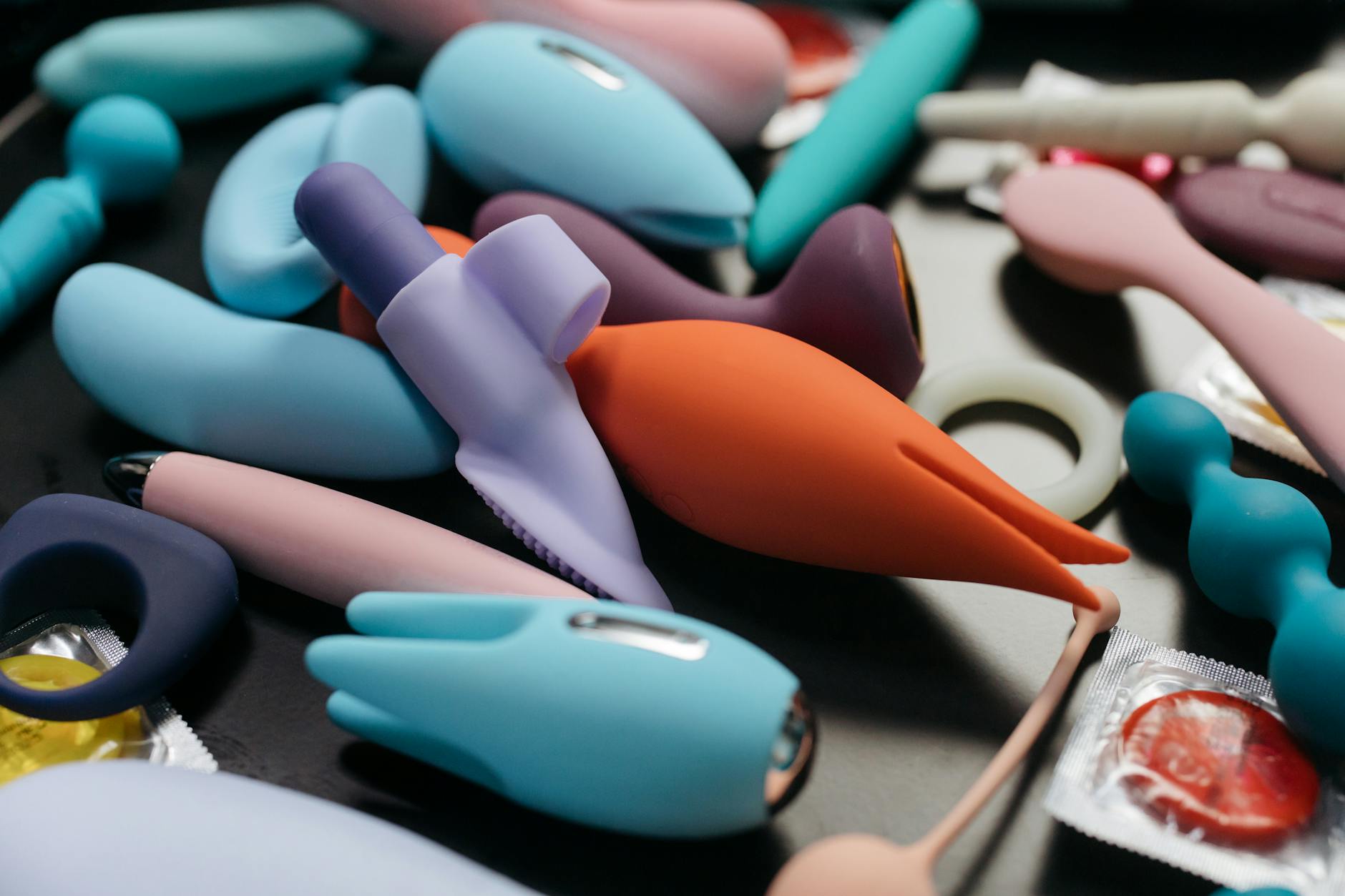
Lemon suction vibrators like the ones at Hello Nancy work differently. Instead of generic vibration across the clitoral surface, suction creates rhythmic pressure that pulls blood into the tissue. This matters when your arousal is dampened because it creates sensation from a different angle.
Think of it this way: if SSRIs are turning down the volume on your natural arousal signals, suction is like turning up the bass. It's a different frequency altogether, and your nervous system responds to it differently.
The other thing lemon clitoral vibrators do well is let you control the intensity gradient more precisely. Most traditional vibrators are either on or off, or have maybe three speed levels. A quality lemon adult toy lets you start at pattern 1, with light suction, and build slowly. When your orgasm response is already slow, that ability to micro-manage the intensity without jumping to overstimulation makes a real difference.
If you're going to try this, don't just use it like you'd use any other vibrator. Here's the sequence that works for most people managing medication-related changes.
Step one: longer warm-up. Budget 20-30 minutes instead of 10. Your body is working harder to create arousal. Give it time. This isn't failure. It's physics.
Step two: start at the lowest setting. Use the Hello Nancy lemon vibrator on its gentlest pattern. Let your tissue wake up first. Suction creates fast results, but if you jump straight to intensity 5, you'll overwhelm a system that's already struggling to find its rhythm.
Step three: use water-based lube. Medication can also affect lubrication. A good quality lube makes suction work more smoothly and reduces the chance that you'll need to crank the intensity to feel anything.
Step four: focus on the edges, not the goal. This is the mental piece. When orgasms are elusive, we tend to grip (literally and mentally) and chase the endpoint. The irony is that this makes the delay worse. Instead, notice the sensations that feel good at each stage. The pressure, the warmth, the rhythm changes. You're retraining your nervous system to find pleasure in the process, not just in the finish line.
If you have a partner, you have a choice about whether to bring them into the conversation about your medication side effects. Neither choice is wrong, but they have different outcomes.
If you decide to tell them, separate the logistics from the emotion. "My antidepressant is making orgasm harder to reach" is a medication fact. "I'm worried this means I don't desire you" is a different conversation, and it often gets tangled up with the first one until both feel unsolvable. Name the difference. Then decide together whether you want to use a tool like a lemon clitoral vibrator as part of partnered sex, or whether you'd rather explore solo first and then reintroduce partnered sex once you've rebuilt your own baseline.
If you decide not to tell your partner, that's okay too. Solo exploration with a new tool often rebuilds confidence faster anyway. You can integrate it into partnered sex later, or keep it as your own thing.
If three weeks of consistent use hasn't created any change, or if the emotional weight of the sexual side effects is affecting your willingness to take medication that's otherwise helping your mental health, it's time to loop back to your prescriber. This is genuinely worth a separate appointment or phone call. Not a throwaway line at the end of a depression check-in.
Your mental health and your sexual health are not competing. But in the moment, they feel like they are. That's when you need professional input on whether a medication change, a timing adjustment, or something else makes sense for your specific situation.
Most people report a shift within the first 3-5 sessions. That doesn't mean you'll have instant orgasms. It means the stimulation will feel different and more pleasurable. Full restoration to your baseline often takes 4-8 weeks of consistent use, especially if you're also making other adjustments like timing or lube. Patience here is the actual strategy.
Absolutely. In fact, it's useful information for your doctor. If you're in the first month of a new antidepressant and you know that suction stimulation does create orgasms (even if they're delayed), that's evidence that the issue is arousal dampening, not tissue damage or nerves. This helps your prescriber decide whether to adjust the dose or explore other options.
No. This is a common fear, but it's not how your nervous system works. A lemon vibrator isn't rewiring your brain to need that exact sensation forever. It's giving you a tool to work with while your neurochemistry is in transition. Many people eventually go back to partnered sex or other forms of stimulation without it. The vibrator is training wheels, not a permanent fixture.
That's a difficult conversation, but it's important. Sexual function is health. It's also a real part of your relationship. If your partner is dismissing it, that's worth naming, ideally with a therapist or counselor who can help both of you understand why sexual pleasure matters in a partnership. This often isn't about the vibrator itself. It's about whether your partner sees your needs as legitimate.
No. Sexual side effects are almost always reversible. They can last as long as you're taking the medication, but switching medications, adjusting dose, or using tools like a lemon vibrator usually resolves them. If you've been on the same medication for a year with no improvement, that's when a medication conversation with your doctor makes the most sense.
Completely normal. Suction stimulation creates a different neurological response than vibration alone. For people whose arousal is already dampened by medication, that different pathway often feels more effective. It's not weird, and it doesn't mean anything is wrong with you. It just means your nervous system is responding to a different input.
Antidepressants are often non-negotiable. Your mental health comes first, always. But that doesn't mean your sexual pleasure has to become collateral damage. A lemon vibrator, combined with patience and the right conversation with your prescriber, gives you an actual strategy instead of just accepting a side effect as permanent.
Start with your doctor. Name the problem. Explore the options. Then, if a lemon clitoral vibrator feels like it might help, approach it as a tool for restoration, not as a Band-Aid for something broken. You're not broken. Your brain chemistry shifted. There's a difference.
If you have questions about how to start that conversation with your partner or your prescriber, or if you want to talk through your specific situation, reach out. That's what we're here for.
If you're looking for more information on antidepressants and sexual health, the International Society for Sexual Medicine and the American Psychiatric Association both publish evidence-based guidance. Your prescriber should have access to this research. If they don't seem familiar with it, asking for a referral to a sex-informed therapist is always a reasonable request.