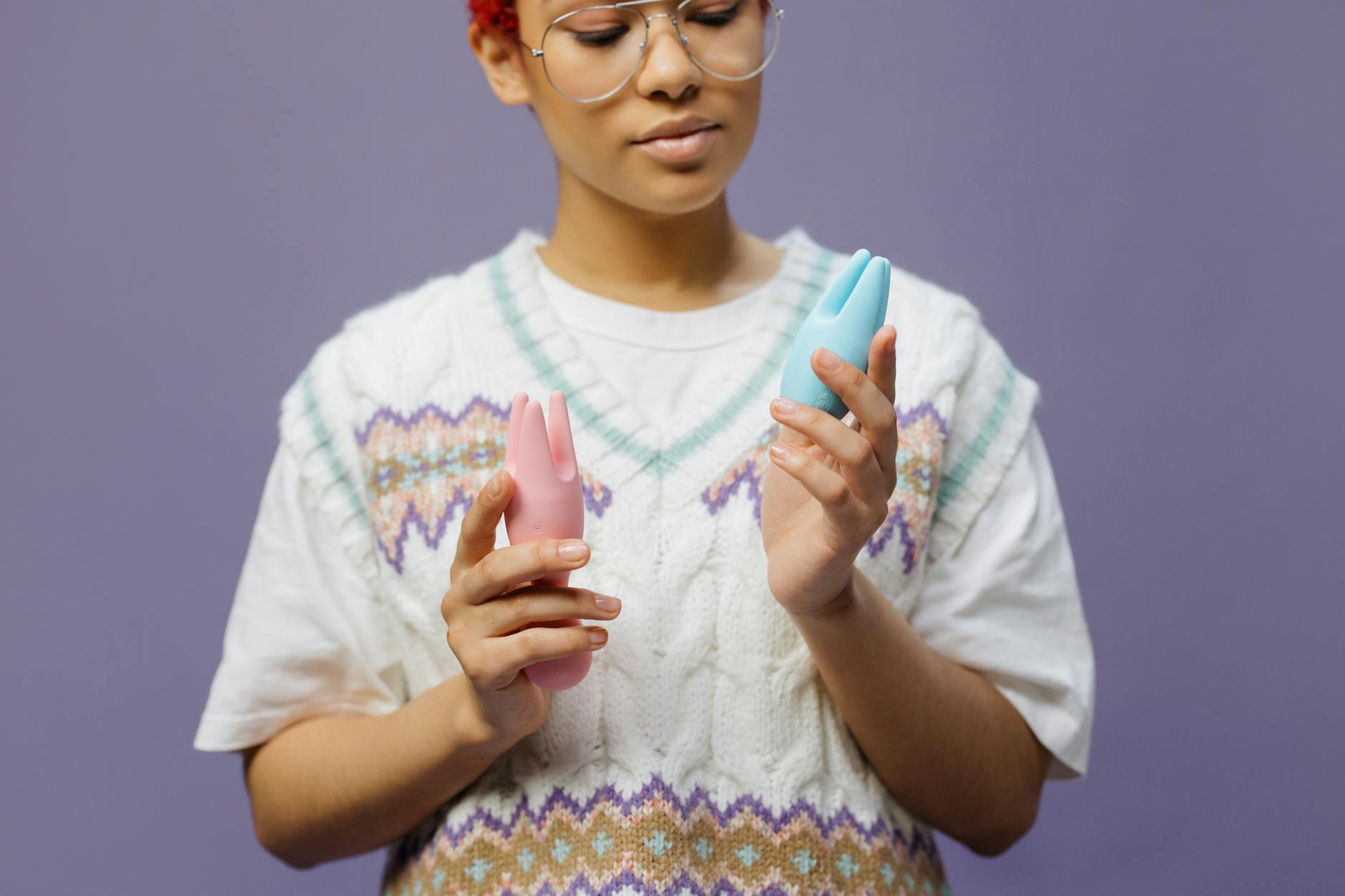
How to Use a Lemon Vibrator With a Partner When You Have Different Pleasure Speeds
One of you is ready in five minutes. The other needs twenty. A lemon clitoral vibrator closes that gap, helps you both arrive at climax together, and turns the mismatch into deeper connection.
Your partner gets there in five minutes. You need twenty. Or vice versa. You've probably never said it out loud because it feels like a personal failure, or like you're asking too much, or like admitting it means something's wrong with the relationship. It doesn't. It just means you have different nervous systems, different bodies, different arousal pathways.
This speed mismatch is one of the most common friction points couples face, and it gets worse the longer you're together because you stop talking about it. A lemon vibrator isn't the solution to anything broken. It's just a tool that lets you both arrive closer to the same moment, without one of you feeling rushed or the other waiting in a weird liminal space.
Your body isn't lazy. Neither is theirs. Here's the actual physiology. Arousal is built on three separate systems: mental readiness (Are you thinking about sex? Are you distracted?), blood flow (Does your genitalia have the physical resources to respond?), and nerve sensitivity (Can your nervous system even register touch right now?).
These three don't sync up automatically between two people. One person might have a wandering mind that needs a long warm-up. The other might have a naturally quick blood-flow response but needs a lot of emotional presence first. Add in hormonal cycles, stress, medication side effects, or just the fact that you had different workdays, and suddenly the timeline splits wide open.
Direct clitoral stimulation works differently in your nervous system than internal penetration or friction alone. A lemon vibrator (sometimes called a lemon sucker because of the suction mechanism) creates a chain reaction in the nerve tissue that bypasses some of the longer warm-up route. This doesn't mean it's cheating or artificial. It means you're using a more efficient neural pathway.
For the person who typically needs more time, a lemon vibrator shortens that timeline because the sensations are so concentrated and intense that arousal accelerates. For the person who arrives quickly, the vibrator gives them something to focus on and extend the experience so their partner can catch up.
It also does something subtler: it removes the pressure. If you're the slow one, you're not lying there thinking "I'm taking too long." If you're the quick one, you're not thinking "Should I wait? Is this annoying?" You're both working toward the same goal with a shared object.
Don't just hand your partner a lemon vibrator and hope for the best. Talk through the logistics first.
Start by deciding who holds it. If it's the receiving partner, they get to control the intensity and pacing, which usually feels better. If it's the giving partner, they can adjust based on real-time feedback. Neither is wrong. The first time, probably let the person who's receiving guide it.
Next, settle the timing. If one of you needs a longer warm-up, that person goes first with the vibrator while the other partner uses their hands or other stimulation. Then, as arousal builds, you transition into partnered activity. This isn't foreplay followed by "real" sex. It's all the same thing. The vibrator is part of the full experience.
Talk about speed preferences. The lemon vibrators have intensity levels, usually from gentle to intense. If you're very different in your needs, you might find that pattern 2 works for you and pattern 4 works for them. Start lower than you think you'll need. You can always go up. Going down mid-session feels like a mood killer.
Using a vibrator together requires saying "I want to do this with you in a way that works for both of us." That sentence does something in a relationship. It cracks open the assumption that good sex should feel spontaneous and natural, and it replaces it with something better: intentional, collaborative, and honest.
If your partner has ever felt like they're the slow one, or the complicated one, or the reason things don't work smoothly, this reframes it. You're not saying "I need this because you're not enough." You're saying "I want us to feel good at the same time, and this is how we get there."
That's vulnerability. And couples who can be vulnerable about pleasure usually are vulnerable about other things too.
Start with clothes on or semi-clothed. This sounds counterintuitive, but it removes some of the performance pressure. You're experimenting, not performing. You get to laugh if something feels weird. You get to pause without it feeling like a thing.
Use lube, even if you don't think you need it. Lube isn't a sign that something's missing. It's a sign that you're thinking clearly and taking care of the experience.
Set a no-pressure agreement beforehand. "If either of us wants to stop or change direction, we just say so, and it's not a rejection." This is especially important if one person is nervous about toys. Knowing you have an exit ramp makes people way more likely to actually enjoy themselves.
Time your session for when you're both reasonably rested. If you're introducing something new, you need bandwidth. Don't do this at 11 p.m. on a work night when you're both depleted.
Usually, couples who try this report two things. First, the physical experience is more enjoyable because you're closer to synchronized. You're not watching your partner from a distance waiting for them to finish. You're in it together.
Second, the emotional experience shifts. You've had a conversation that says "your pleasure matters to me enough that I'm willing to be deliberate about it." That's not small. That carries over into how you touch each other, how you listen, how you show up in other parts of the relationship.
Some couples use the vibrator every single time. Some use it occasionally to reset the rhythm. Some find that once they've done it together, they understand each other's body better and the speed gap naturally narrows. All of that is fine.
The point isn't the vibrator. The point is that you stopped pretending the gap didn't exist and started working with it instead of around it.
If one of you feels insecure, that's worth naming. "I worry this means I'm not doing enough" is a real thought, and it deserves a real answer. (The answer is usually no. It means you're smart and collaborative.)
If the vibrator feels impersonal, you might be using it wrong. It's not meant to replace your hands or mouth. It's meant to work alongside them. Keep touching your partner. Stay present. The vibrator is a tool, not a substitute for you.
If you're not sure about intensity, start at the lowest setting and gradually move up as you go. Your body will tell you what feels good. Listen to your partner's responses, not your assumptions about what they should like.
If you're both quick and neither of you needs the speed adjustment, that's genuinely great. You might still enjoy a lemon vibrator for variety, or for extending the experience because it just feels incredible. Pleasure is the only metric that matters.
Nope. It usually means the opposite. Couples who introduce toys together are saying, "I want to invest in this. I want it to feel good for both of us." That's evidence of commitment, not a red flag.
Honor that. Pressure doesn't work. Instead, ask what the discomfort actually is. Is it about feeling replaced? About shame around toys? About control? Different concerns need different conversations. You might start by reading about lemon vibrators together, or by having your partner use it on themself first, or by just shelving it for now. Forcing it kills intimacy faster than avoiding it.
Yes, and you might find it especially helpful. Antidepressants can numb sensation, which makes climax harder. A concentrated stimulus like a lemon clitoral vibrator sometimes bypasses that numbness more effectively than hand stimulation alone. That said, talk to your doctor if sensation changes feel new or distressing. It might be a side effect that can be managed.
Lead with curiosity, not criticism. "I've been thinking about how we could both feel more satisfied" is different from "You take too long." Frame it as an experiment, not a fix. "I want to try something that might feel good for both of us" invites collaboration instead of defensiveness.
Then you've learned something. Some couples sync better with vibrators. Some find that the real gap is emotional, not physical. Some discover they actually like the different speeds because it means one person can focus on the other's pleasure. The goal isn't to become synchronized. It's to understand your bodies and each other better.
Lemon vibrators use suction stimulation instead of straight vibration, which creates a different sensation in the clitoris and surrounding tissue. For some people and some situations, that's ideal. For others, a traditional vibrator works just fine. The best one is the one that feels good to you. Start with what appeals to you, and adjust from there.
They're not actually about sex. They're about feeling known. When your partner meets you where you are, when they adjust the experience so that you both arrive satisfied at roughly the same moment, that's intimacy. That's the opposite of performance. That's paying attention.
A lemon vibrator is just the apparatus. The real work is the conversation. The willingness to name the gap instead of pretending it isn't there. The trust that using a tool together doesn't diminish what you have. It expands it.
You deserve to feel good during sex. So does your partner. And you deserve to feel that good at the same time.