How to Use a Lemon Vibrator for Couples With Mismatched Desire
When one partner wants sex more than the other, a lemon clitoral vibrator isn't just a toy. It's a conversation starter, a bridge, and sometimes the thing that saves a couple from years of quiet resentment.
Desire mismatch is the reason more couples end up in my office than almost anything else. Not infidelity. Not money fights. Not even parenting disagreements. It's the person who wants sex twice a week lying next to the person who wants it twice a month, and both of them feeling rejected, inadequate, and trapped.
Here's what most couples don't know: a lemon vibrator, used thoughtfully, can actually shift that dynamic. Not by forcing anyone into sex they don't want. But by creating a framework where both people's needs get honored at the same time.
When one partner has higher desire, two things usually happen. Either the higher-desire partner starts initiating less to protect themselves from rejection. Or they initiate more, which makes the lower-desire partner feel pressured and resentful. Both paths lead to the same place: more distance, less touch, more loneliness.
The lower-desire partner, meanwhile, often feels guilty. They know their partner wants sex. They don't want it less to punish anyone. They just genuinely want it less. And that guilt can actually make desire drop further because sex becomes tied to shame instead of pleasure.
A lemon vibrator enters the picture differently. It's not about convincing the lower-desire partner to have sex they don't want. It's about creating a sexual experience where the higher-desire partner gets pleasure without demanding the lower-desire partner's full participation.
I recommend what I call the "parallel pleasure" model. Here's how it lands in real time.
The lower-desire partner agrees to a specific window of time, maybe fifteen minutes on a Sunday morning. No expectation of intercourse. No expectation that they'll be aroused. Just: they're present, they're aware their partner is being sexual, and they can touch, kiss, or watch if they want to. Or they might read, or doze, or just lie next to their partner.
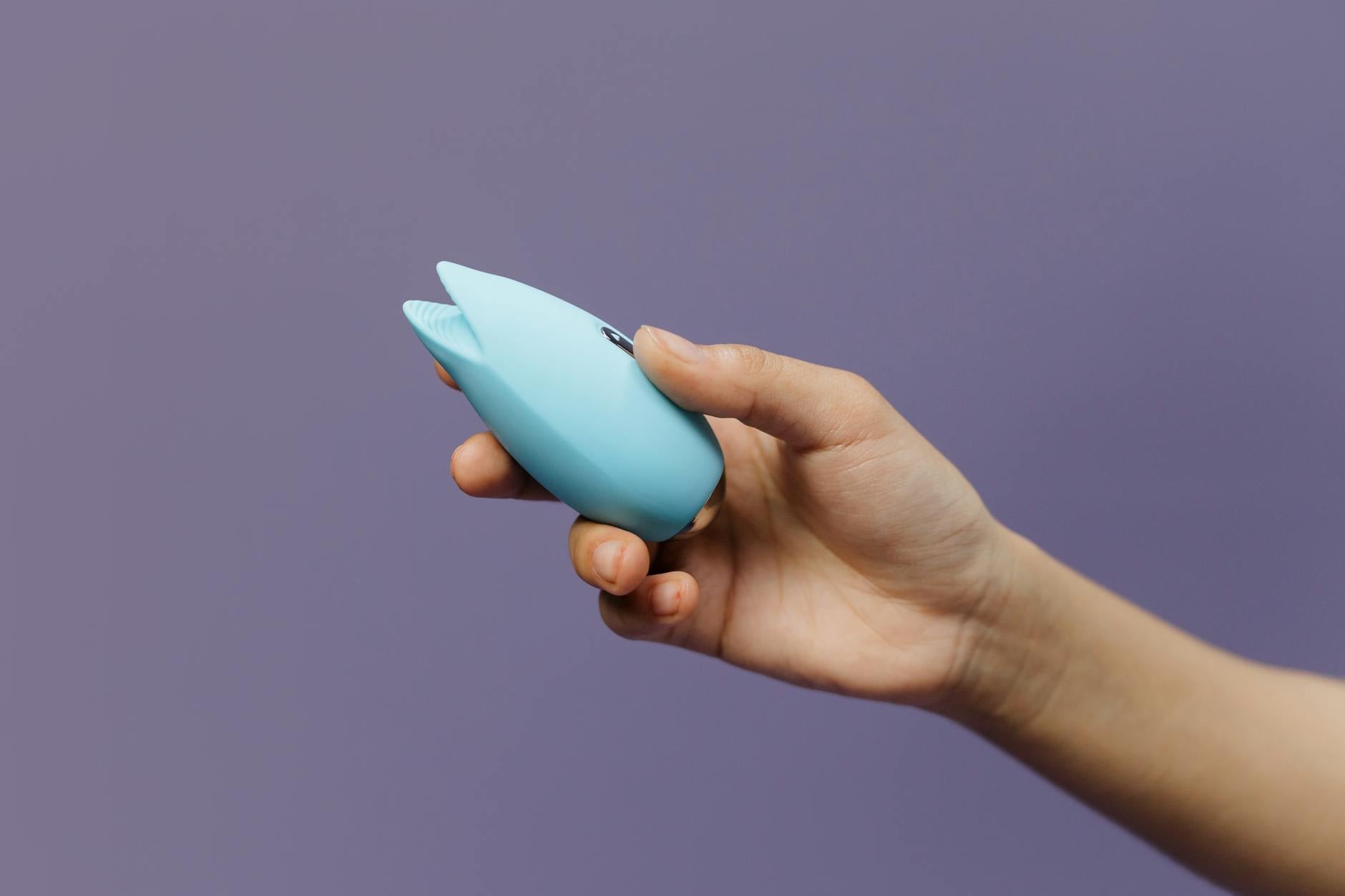
The higher-desire partner uses a lemon clitoral vibrator during this time. The device works well here because the suction mechanism doesn't require the same physical intensity as other vibrators. It's quieter, more discrete, and often gets the job done faster. The experience takes 10 to 15 minutes, not an hour of negotiation and performance pressure.
What changes is the tone. Instead of rejection, the lower-desire partner is saying: "I love you. I'm here. I'm supporting this part of you even though I'm not necessarily excited about it right now." And the higher-desire partner gets to experience pleasure that isn't contingent on their partner's arousal or participation.
Don't lead with the vibrator. Lead with the truth. "I've been feeling disconnected. And I think we're both stuck in a pattern where you feel guilty and I feel rejected, and neither of us is getting what we need."
Then: "I don't think the answer is for you to want sex more. I think the answer is for us to find a way for both of our needs to exist at the same time, without one of us having to lose."
If your partner is receptive, then you can introduce the tool idea. "I've been thinking about trying something different. What if I used a lemon vibrator during our intimate time, so I could get pleasure without needing you to be aroused? You'd be there. We'd be connected. But you wouldn't have to perform."
This reframes the vibrator from "something is wrong with our sex" to "we're trying something new to make room for both of us."
This part surprised me when I first started recommending this. Many lower-desire partners reported that once the pressure lifted, something loosened. They felt less guilty. They could actually pay attention to their partner's body and pleasure in a way that felt intimate instead of obligatory.
Some reported that watching their partner use a lemon vibrator was arousing in a way their partner's usual initiation never was. Why? Because there was no demand. No expectation. Just someone they love experiencing pleasure.
Others reported that this became their preferred way to be sexual together. The lower-desire partner would sometimes ask to be the one who controlled the vibrator. The dynamic shifted from "I have to let them have sex" to "I get to do this for them."
And plenty reported that it didn't change their arousal level at all. They were still lower-desire. But they felt less guilty about it. Their partner felt less rejected. The relationship stopped dying in this one area.
Most couples have two fears about introducing a vibrator into this kind of mismatch.
First: "Won't it make the lower-desire partner feel even worse, like they're being replaced?" Sometimes, if you introduce it wrong. But if you frame it as a tool for bringing both people's needs into the same room, it usually feels like relief instead.
Second: "Won't my partner become dependent on it and stop wanting me?" This is probably the hardest question, because it often reflects a deeper belief that partnered sex and solo sex are in competition. They're not. Most people who use a lemon vibrator with a partner find it actually increases their desire for partnered sex because the pressure decreases. When sex doesn't have to solve everything, people usually want more of it.
There's also the "won't this make me seem like I'm not enough" fear. That one usually needs to be addressed directly. Your partner's desire level has nothing to do with how attractive you are. It's biology, stress, medication, past experience, and temperament. A vibrator is a tool that lets you both have your needs met simultaneously. That's not a reflection of insufficiency. That's called a solution.
I mention lemon vibrators specifically because of how they're designed. The suction technology means you get strong, focused stimulation without needing a lot of movement or performance from a partner. It's quieter than most vibrators, which matters if you have kids or thin walls. And the device typically brings someone to orgasm in 10 to 15 minutes, which matters when you're trying to fit this into a window that works for both of you.
The psychological part matters too. A lemon vibrator feels like a Hello Nancy product, which means it feels intentional and thoughtful. It's not a desperate addition to a failing sex life. It's a tool that couples buy when they've decided to approach their desire mismatch thoughtfully.
Sometimes this becomes a regular practice. Sometimes it becomes something you do once a month and that's enough. Sometimes one partner discovers they actually do want more partnered sex once the pressure lifts.
The important thing is that the frame has shifted. You're no longer in a situation where one person's need is swallowing the other person's capacity. You're in a situation where both of you have decided that your different desires are something you can solve together.
That shift, more than any specific practice, is what saves couples in this situation. Because desire mismatch is rarely about the desire itself. It's about what the desire mismatch means to both people. When you change the meaning from "my partner doesn't want me" and "I'm failing my partner" to "we're figuring this out together," the whole system relaxes.
And when the system relaxes, sometimes desire actually shifts on its own. Not always. But often enough that I've seen this approach help hundreds of couples stay connected through this one of the hardest areas of long-term partnership.
It does both. In the short term, it creates a practical solution where both people's needs get met without either person sacrificing. In the longer term, once the resentment and guilt lift, couples often find that their baseline desire actually shifts closer together. They want more sex when it doesn't come with pressure. And the lower-desire partner often finds they can be present in ways they couldn't when they were defending against demands.
This is why the conversation matters so much more than the tool. You have to be clear that the vibrator is a way to make room for both of you, not a replacement. If your partner still feels rejected after you've explained it thoughtfully, that might be a sign you need to talk to someone together. Sometimes desire mismatch is covering something deeper.
Absolutely. Some couples find that the lower-desire partner can be more engaged in partnered sex when they know there's no pressure to orgasm or sustain arousal for a certain amount of time. The vibrator does some of the work, which means the lower-desire partner can just enjoy the closeness and connection without having to perform.
There's no expiration date. Some couples use this once or twice a month for their entire relationship. Others find that after six months of regular use, something shifts and they want more sex with each other. The goal isn't to eliminate the mismatch. It's to make sure the mismatch doesn't poison the relationship.
That discomfort usually comes from somewhere, and it's worth exploring together. Is it about insecurity? Values? Feeling like it's cheating? Religious beliefs? Once you understand the actual concern, you can usually address it. For example, if your partner is worried about addiction or that you'll prefer the vibrator to them, you can talk about that directly. If it's about values, you might need to find a compromise or get some perspective from a couples therapist.
No. Some couples have desire mismatches that need a different kind of intervention. Some have deep trust issues or resentment that a vibrator isn't going to fix. Some have medical or hormonal issues that need clinical attention. But for couples who have a garden-variety desire mismatch, where one person just wants sex more than the other and both people love each other and want to stay connected, this approach often works.
Desire mismatch doesn't have to be the thing that slowly strangles a relationship. It can be the thing that forces you to get creative, to communicate more honestly, and to figure out how to honor both people's needs at the same time. A lemon vibrator is just a tool that can make that easier. The real work is deciding that your partner's different desire is something you can solve together instead of something that proves you're incompatible.
If you're in this situation and you're not sure where to start, that's what we're here for. Reach out to Hello Nancy or consider talking to a couples therapist who understands that desire mismatch is one of the most common and most solvable relationship problems.