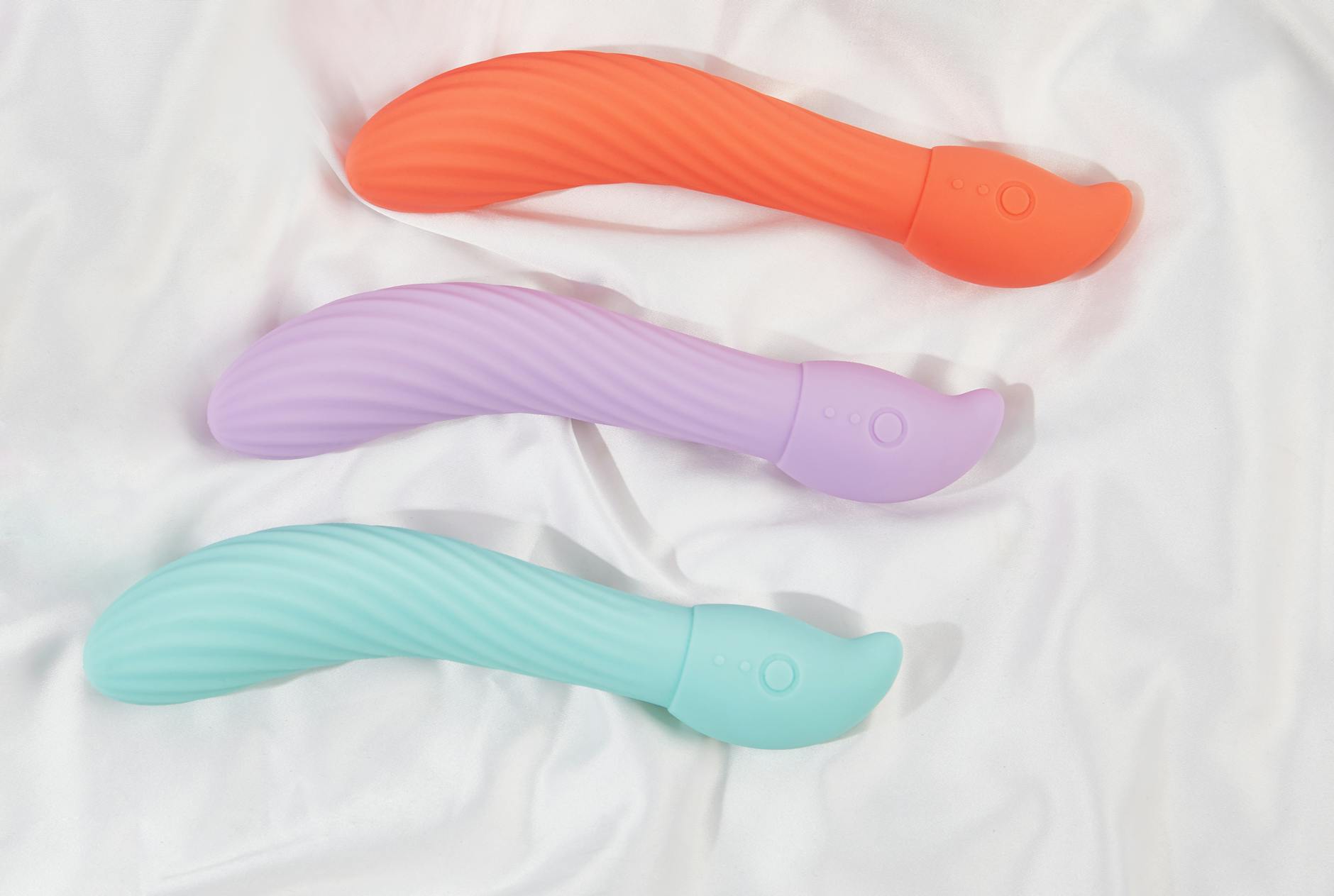
How Lemon Vibrators Work Better During Hormonal Shifts
Your lemon clitoral vibrator feels different week to week. Here's why your body is changing, not the toy, and how to work with your cycle instead of against it.
Your body isn't broken when a lemon vibrator feels less intense on day 18 than it did on day 8. Your hormones are just doing their job. Estrogen and testosterone fluctuate throughout your cycle, which means clitoral sensitivity, arousal speed, and orgasm intensity shift too. This isn't a malfunction. It's actually useful data about how your body works.
Most people don't realize that a lemon clitoral vibrator isn't a one-size-fits-all tool. The settings that feel amazing mid-cycle might feel overwhelming during your luteal phase. Understanding the rhythm of hormonal shifts lets you adjust your approach and actually enjoy pleasure more consistently, not less.
Estrogen peaks around ovulation, roughly day 14 of a 28-day cycle. When estrogen is high, blood flow to the genitals increases, tissues are thicker and more resilient, and your nervous system is primed for sensation. This is when a lemon vibrator's mid-range intensities often feel best. Your body responds quickly, arousal builds faster, and you might find yourself reaching for higher settings without discomfort.
Then estrogen drops. Around day 21, progesterone rises, and everything shifts. Tissue becomes more sensitive but also more fragile. The pelvic floor tightens slightly. Blood flow decreases a little. This is the luteal phase, and it's when many people find that their usual vibrator settings feel too strong, too sharp, or even mildly uncomfortable. The sensation is still there, but the tolerance changes.
Testosterone, which peaks just before ovulation, contributes directly to desire. When it's high, you might crave more stimulation and feel more assertive about what you want. When it's low, gentler exploration often feels better.
If you're using a lemon vibrator with adjustable patterns, which tools like the Lem offer, you don't need a different toy for different weeks. You need a different strategy.
Follicular phase (day 1-14). This is when estrogen is building toward ovulation. Start with patterns 3 or 4 on your lemon clitoral vibrator. Your tissues are thickening, blood flow is increasing, and your body can handle more intensity without irritation. Many people find they want higher settings or longer sessions during this window. Trust that impulse.
Ovulation window (day 12-16). Estrogen peaks, testosterone surges, and this is often when sensation feels most acute. You might jump to pattern 5 or 6 and find it exactly right. Some people experience multiple orgasms more easily. Some report stronger, faster responses. Your lemon vibrator's suction-based stimulation often feels particularly effective here because the tissue is optimally hydrated and responsive.
Luteal phase (day 17-28). This is where most people need to dial back. Start with pattern 1 or 2. Use longer warm-up time. Add lubricant even if you haven't needed it before. The goal isn't to feel less, it's to feel right. A gentler approach during the luteal phase often creates deeper, more grounded pleasure. Some people find that switching from rapid pulses to slower wave patterns feels better now.
Hormonal shifts directly affect natural lubrication. Estrogen helps maintain vaginal fluid and thickness. When estrogen drops in the luteal phase, the tissue dries slightly. This doesn't mean anything is wrong. It means lubrication matters more.
Water-based lubricant becomes your ally during your luteal phase. Even if you don't usually need it, adding a small amount changes the whole experience with a lemon vibrator. It reduces friction, makes sensations feel smoother instead of sharp, and actually extends pleasure. You're not compensating for a problem. You're working with your body's real biology.
Silicone-based lubes feel richer but damage silicone toys over time. Stick to water-based, always.
Traditional vibrators work through direct mechanical stimulation. When your tissue sensitivity is high, more intensity can feel overwhelming. When sensitivity is low, you need more power to feel anything.
Lemon vibrators, which use air-suction technology, work differently. They stimulate through suction and pulse, not friction. This means they feel less harsh on sensitive tissue while still delivering consistent sensation across different hormone phases. The Lem, for example, lets you adjust both intensity and pattern independently. Mid-cycle, you might run a fast pattern at high intensity. During your luteal phase, the same tool at pattern 2, low intensity, feels completely different but still satisfying.
The architecture of your clitoral nerves doesn't change across your cycle. Air-suction targets those nerves without relying on tissue thickness to buffer intensity. This is why many people find that lemon clitoral vibrators remain effective and adjustable throughout the month, even as their sensitivity fluctuates.
This sounds clinical, but it's worth doing for two weeks: note when you use your lemon vibrator, what pattern and intensity you chose, and how it felt. After one full cycle, you'll see your own rhythm. Maybe you need pattern 3 on days 8-14 and pattern 1 on days 21-26. Maybe you prefer longer warm-up time during your luteal phase. Maybe you notice that intensity matters less than pattern choice during certain windows.
Your body is giving you information. The vibrator isn't broken. You're just learning your own baseline.
Some people experience such dramatic sensitivity swings that pleasure becomes inconsistent in ways that feel frustrating. This can be normal cycle variation, but it can also signal hormonal imbalance, nutritional deficiency, or sometimes thyroid dysfunction.
If your sensitivity shifts feel extreme, unpredictable, or uncomfortable, talking to a healthcare provider is worth it. Birth control changes, nutrient levels (iron, magnesium, vitamin D), and thyroid function all affect genital sensation. <a href="/blog/lemon-vibrator-with-anxiety-or-sensory-sensitivity">Learning to use your lemon vibrator with sensory sensitivity</a> is one piece. Understanding what's driving the sensitivity is another.
Most people think their lemon sucker isn't working because it feels different mid-cycle. They blame the toy, get frustrated, and stop using it. What actually happened is they expected a constant experience from a body that naturally varies.
Once you know why sensation shifts, you stop fighting it. You adjust. A pattern that feels boring on day 12 becomes delicious on day 24 because your body genuinely experiences it differently. This isn't settling. It's actually more pleasure, not less, because you're aligning with how you're built instead of against it.
Estrogen can increase clitoral blood flow by 25-40% around ovulation, which directly impacts tissue thickness and nerve sensitivity. This is why you're not imagining it. The change is real and measurable. Most people notice 2-3 intensity levels of difference between their follicular and luteal phases.
Absolutely. Hormonal birth control flattens your cycle's peaks and valleys. Many people on combined oral contraceptives report more consistent sensation throughout the month because estrogen and progesterone levels don't swing as dramatically. Some people actually prefer how vibrators feel on hormonal birth control for exactly this reason. Others find the flattened hormonal landscape reduces desire overall. It varies widely.
No. A good lemon vibrator with adjustable intensities and patterns handles cycle variation beautifully. Tools like the Lem are designed to be responsive across different settings, so you're not buying separate toys for different weeks. You're just learning which settings work when.
Tissue sensitivity increases and natural lubrication decreases. Both are normal. Add water-based lubricant, start at a lower intensity, and allow more warm-up time. If discomfort persists or feels sharp, check that you're not pressing the vibrator too directly into delicate tissue. Angle and positioning matter more when hormone levels shift.
Completely. Many people report that luteal-phase orgasms feel different, deeper, or more full-body rather than quick and intense. Some experience them more easily. The experience changes, but capacity doesn't. Slower patterns and gentler settings often unlock better sensation during this phase, not worse.
Yes. Most people who track for one cycle suddenly understand why certain settings worked some weeks and felt wrong others. You stop blaming the tool and start working with your body. That shift alone usually makes pleasure more consistent and intentional.
Your lemon vibrator isn't a fixed experience. It's a tool that you learn to use better as you understand your own body's rhythm. The variations across your cycle aren't bugs. They're features that, once understood, actually give you more information about your pleasure. That knowledge is power.