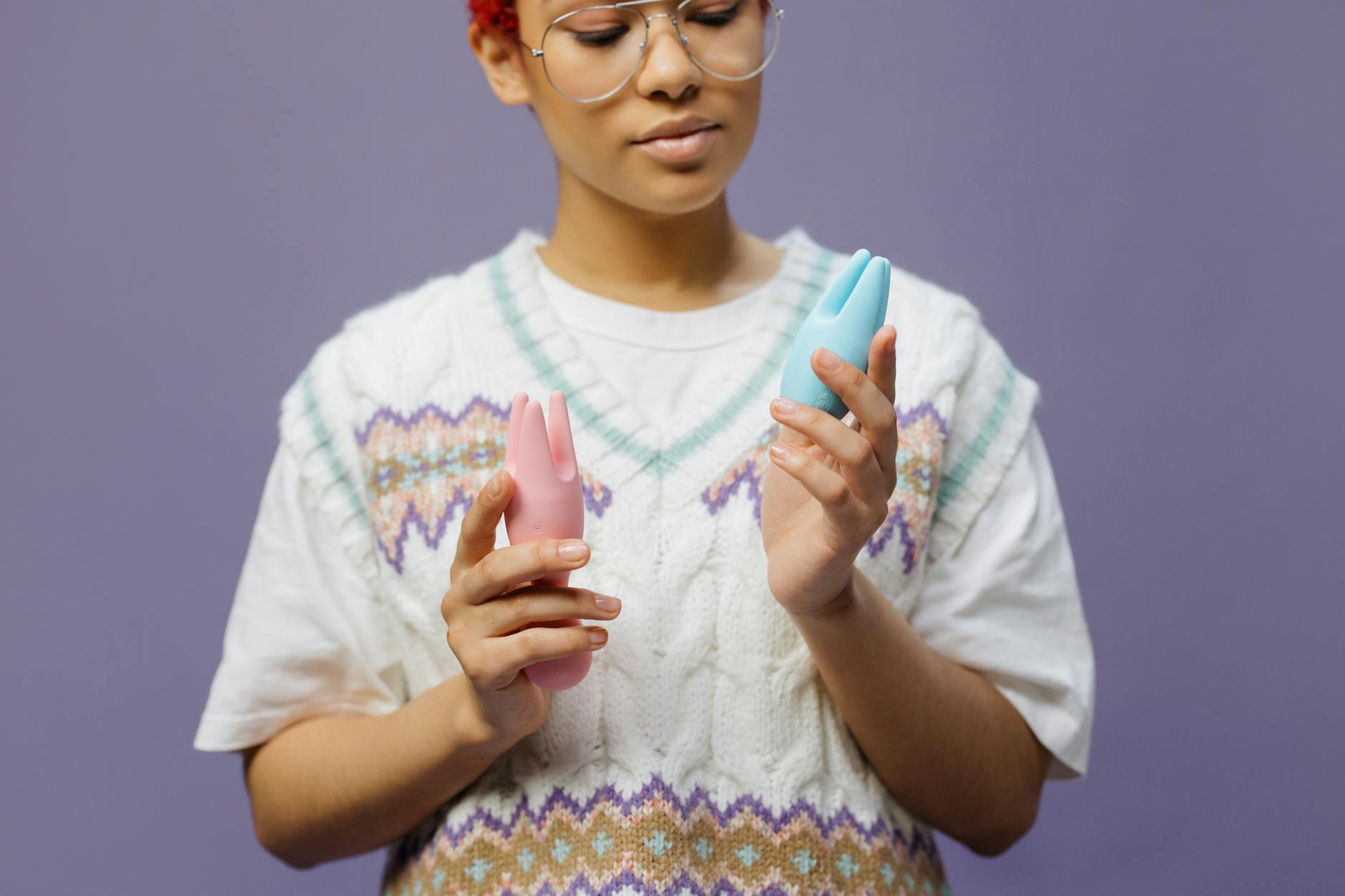
How Lemon Vibrators Feel Different Across Your Cycle
Your body is not static. Hormone shifts reshape clitoral sensitivity week by week. Here's what that means for your lemon clitoral vibrator, and how to adapt.
Your clitoris is not the same every week. Hormone fluctuations across your menstrual cycle reshape blood flow, nerve sensitivity, and how quickly you reach peak arousal. That lemon vibrator that felt perfect on day 10? It might feel too intense on day 20. This is not a malfunction. It's biology.
Estrogen is climbing. Your clitoris is becoming engorged with blood and more reactive to touch. This is the phase where lemon vibrators often feel most effective because your tissues are primed for stimulation and arousal builds quickly.
Week one (the bleeding week) is sometimes tender. Your pelvic floor might feel heavier, and direct clitoral suction can feel overwhelming. Many people find they prefer lower intensity settings on their lemon adult toy or skip penetrative touch altogether during this window.
By week two, estrogen peaks. Your clitoris is at maximum engorgement. This is often when suction-based stimulation feels best. The lemon sucker design works particularly well here because it doesn't rely on aggressive vibration. The gentle pulse combined with the seal creates sensation that feels almost meditative rather than relentless. If you've been wondering why intensity 2 or 3 on your lem vibrator suddenly feels incredible, this is why.
Your arousal time also shortens. Where you might need 20 minutes in week one, you might need 10 by week two. That makes this the phase where quick, satisfying sessions with your lemon clitoral vibrator feel most rewarding.
This is the sweet spot. Estrogen and testosterone are both at their highest. Your clitoris is maximally sensitive. Orgasms are often easier to reach and can feel more intense.
Here's what changes with your lemon vibrator: you might want higher intensity than usual. Some people jump from pattern 3 to pattern 5 during ovulation. Others find that the same setting that felt good last week now feels barely noticeable. Both are completely normal.
Your body might also handle sensation differently. If you typically prefer longer warm-up time, ovulation week often flips that. People describe feeling almost immediately ready. That shift is not psychological. It's hormonal. Your brain literally responds faster to stimulation when testosterone is elevated.
This is also when partnered pleasure often feels easiest, if that's relevant to your life. Less negotiation about readiness. More intuitive alignment. The lemon clitoral vibrator can enhance that without making things feel clinical.
Progesterone is rising. Estrogen is falling. Your clitoris is less engorged and less reactive. This is the phase where many people think their lemon vibrator is broken. It's not. You are.
You will need more time to warm up. Expect 25 to 35 minutes instead of 10. You might find that intensity 2 feels better than intensity 5, even though the opposite was true last week. Lower intensity, longer sessions, more emphasis on the experience than the outcome. This is not settling. This is adapting.
The luteal phase is also when sensation can feel scattered or hard to focus on. Your nervous system is naturally more on edge. Some people find that the consistent, predictable pulse of lemon sexual toys helps because there's nothing surprising about it. Others prefer hand stimulation or partnered touch that allows for more variation.
Pain can also show up in the luteal phase, especially for people with endometriosis or painful periods. If that's you, clitoral suction might feel soothing at lower intensities (it can actually ease pelvic tension), or it might feel like too much. Track what works. Your needs are valid either way.
Traditional vibrators rely on frequency. They buzz at a fixed rate. If your sensitivity is lower, that fixed rate becomes either frustrating (you can't feel it) or overwhelming (it's all you can feel, no nuance).
Lemon clitoral vibrators work differently. The suction and pulsing pattern creates a rhythmic sensation that doesn't depend as heavily on your baseline sensitivity. A lower intensity setting can still register as pleasurable because it's not just about vibration frequency. It's about the seal and the pressure. That design flexibility is why they tend to work well across hormonal fluctuations.
That said, even the best lemon vibrator won't feel the same every week. Accepting that is key.
Stop relying on memory. Your cycle is roughly 28 days. Mark it down. Note the week, the day of your cycle, the intensity setting you used, how long it took to reach orgasm, and how it felt afterward.
After two or three cycles, patterns emerge. Maybe you notice that days 12-15 are always intensity 4 or 5 territory. Days 20-25 are intensity 1 or 2. Days 1-7 are unpredictable. Once you see the pattern, you can plan. Not in a rigid way. Just in a way that reduces frustration.
Tracking also helps you separate hormonal shifts from other factors. Sometimes you think it's your cycle when it's actually stress, sleep deprivation, or a partner dynamic. The data helps you see what's actually happening.
Hormones affect mood too. The luteal phase often brings more introspection, vulnerability, or fatigue. That can make pleasure feel less urgent or harder to access emotionally.
If you're partnered, this is worth communicating about. Not as "I have hormones, excuse me." But as "My body needs different things at different times, and that's information we can use together."
Likewise, solo pleasure in the luteal phase might shift. You might crave longer, more meditative sessions instead of quick orgasms. You might want to focus on sensation rather than performance. A lemon vibrator works beautifully for that because you can dial it down and just exist with the feeling without the pressure of a toy that demands a particular kind of engagement.
Pain that persists across all phases of your cycle? Worth checking in with a doctor about. Genitourinary syndrome of menopause, or deep pelvic pain during the luteal phase, might need professional support. A lemon vibrator can be part of managing that, but it's not a substitute for evaluation.
Sudden loss of sensation across your whole cycle? Sometimes this happens with long-term toy use, sometimes it's stress, sometimes it's medication. Why Does My Lemon Vibrator Feel Less Intense Than Before digs deeper into troubleshooting that.
Your cycle is not a problem to fix. It's information. Your lemon clitoral vibrator is not broken every other week. Your body is doing exactly what it's supposed to do. Once you accept that pleasure feels different at different times, and you adjust accordingly, you get to experience the full range of what your body is capable of.
Your period week often brings pelvic heaviness, lower blood flow to the clitoris, and heightened nerve sensitivity at the same time. That combination can make direct vibration feel either dull or sharp. Many people find that lower intensity, longer warm-up, or skipping suction altogether for a few days works better. It's not that your lemon sexual toy stopped working. Your body is in a different state and needs a different approach.
Yes. Hormonal birth control flattens your cycle's peaks and valleys. You might notice less dramatic week-to-week shifts in sensitivity. Some people on hormonal contraception find consistent pleasure across the month. Others still experience variation because other hormones and neural factors are at play. The same adaptability principles apply. Track what works and adjust as needed.
No. Ovulation week is often when people enjoy their lemon vibrator most because sensitivity is highest and arousal comes quickly. There's nothing harmful about using any toy during ovulation. Some people prefer to, some don't. Your preference matters more than any rule.
Your clitoris is less engorged and your nervous system is naturally more activated. The same intensity that felt pleasant during ovulation can feel sharp or overwhelming now. Drop to a lower intensity setting, extend your warm-up time, or take a break and come back another week. Sensation will feel better when your hormones shift again.
Yes. A tampon or cup can create pressure that makes clitoral suction feel different. Some people remove their period product before masturbation. Others prefer external clitoral stimulation that doesn't involve internal contact. Neither choice is better. What works for your body is what works.
Completely normal. Estrogen drives arousal and the ability to become physically aroused. Testosterone drives desire. Both fluctuate across your cycle. Follicular phase? Faster arousal, easier orgasms. Luteal phase? Slower to start, requires more intention. That's not a dysfunction. That's your hormones doing their job. Understanding it makes pleasure planning easier, not more stressful.